Local SEO Ranking Factors: What Actually Determines Local Search Rankings

Local SEO Ranking Factors Local Search Rankings Bowling Green KY Nashville TN Lift SEO Services

Local SEO Ranking Factors: What Actually Determines Local Search Rankings
Lift SEO Services · Updated July 2026 · 9 min read
Local SEO Ranking Factors Local Search Rankings Bowling Green KY Nashville TN Lift SEO Services

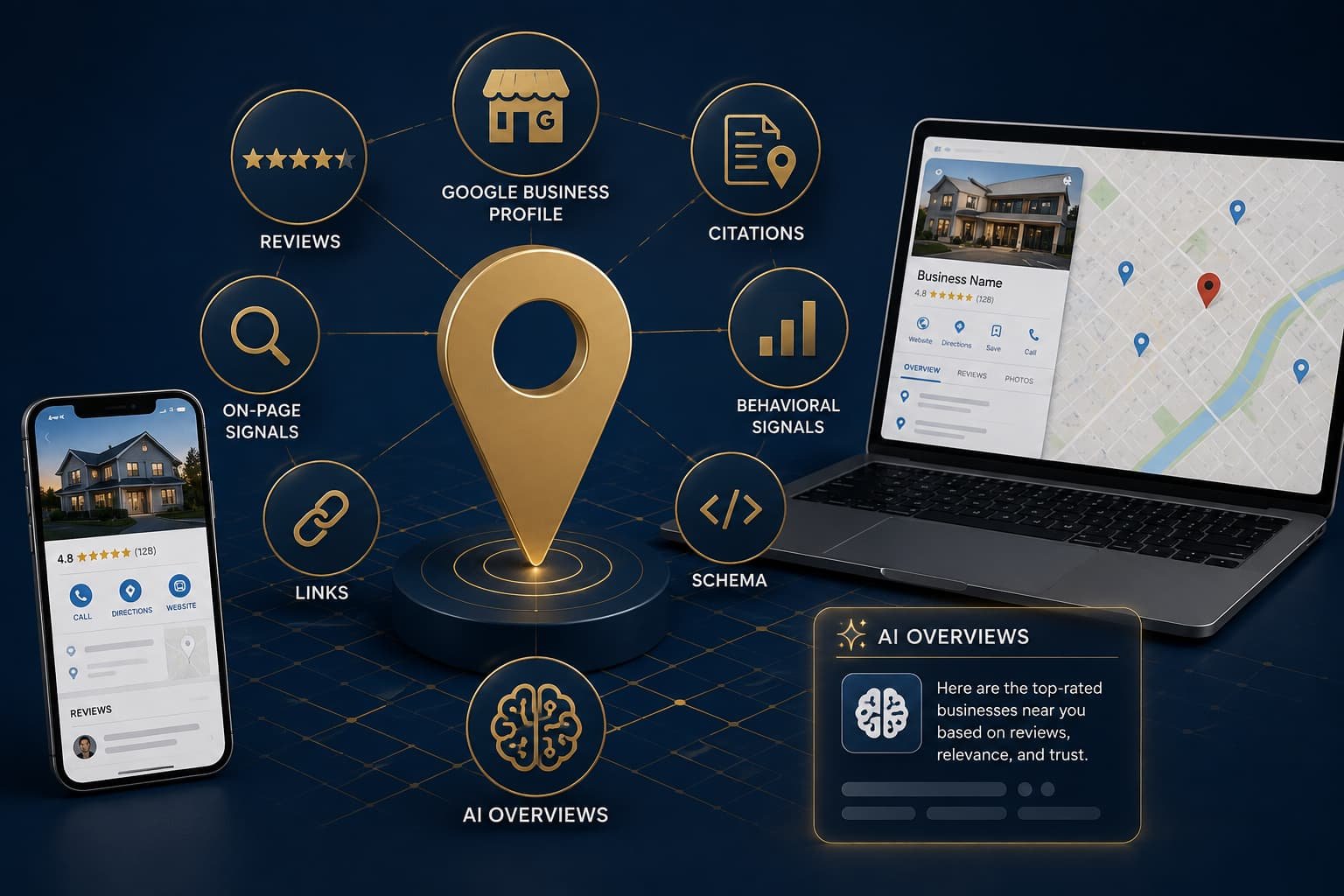
Local SEO ranking factors are the signals Google, and increasingly AI Overviews and LLMs, use to decide which businesses to show for a local search. They range from your Google Business Profile and reviews to citations, on-page signals, links, and how real searchers behave once they find you. Here’s what actually moves the needle, and what’s changed now that AI is part of the equation.

TL;DR: Google’s local ranking algorithm officially runs on three factors: relevance, distance, and prominence. In practice, prominence is built from dozens of underlying signals, your Google Business Profile completeness, review quantity and quality, citation consistency, on-page and website signals, backlinks, behavioral signals like clicks and calls, and structured data. AI Overviews and LLM assistants now draw on many of these same signals, plus how consistently your business’s facts appear across the web, to decide who they recommend.

45%
of consumers now use AI tools for local business recommendations, up from 6% in 2025
Source: BrightLocal, 2026
68%
of consumers require at least 4 stars before they’ll use a business
Source: BrightLocal, Local Consumer Review Survey, 2026
74%
of consumers only weigh reviews written in the last three months
Source: BrightLocal, Local Consumer Review Survey, 2026

What Are Local SEO Ranking Factors?

Local SEO ranking factors are the signals search engines use to decide which businesses to show, and in what order, for a search with local intent: “[service] near me,” “[service] in [city],” or a plain “[service]” search where Google already knows the searcher’s location. Google states its own framework plainly: local ranking comes down to relevance, distance, and prominence.

  • Relevance: how well your Business Profile and website match what the searcher is looking for
  • Distance: how far your business, or your service area, is from the searcher or the location they specified
  • Prominence: how well-known your business is, both on Google and across the web

Distance is largely outside your control, you can’t move your business closer to every searcher. Relevance and prominence, on the other hand, are built from dozens of specific, controllable signals, which is what the rest of this guide breaks down.

It helps to think of these factors working together rather than in isolation. A plumber with a perfectly optimized Google Business Profile but zero reviews will struggle to outrank a well-reviewed competitor with a thinner profile, because prominence is doing most of the work in a crowded local pack. Likewise, a business with excellent reviews but an incomplete profile or inconsistent citation data can lose ground to a less-established competitor simply because Google can’t confirm the basics confidently enough. The businesses that consistently win local visibility treat all of these factors as one connected system, not a checklist to complete once and forget.

Google Business Profile: The Foundation of Local Ranking Factors

Your Google Business Profile (still often called GMB, Google My Business, its former name) is the single biggest lever for local ranking factors, because it’s what most directly populates the local pack and Google Maps. A complete, accurate, actively maintained profile signals both relevance and prominence at once.

Categories, Attributes, and Photos

The single most accurate primary category, plus every relevant secondary category, tells Google exactly what you do and who you should rank for. Attributes add further specificity, “wheelchair accessible,” “online estimates,” “women-owned,” whatever genuinely applies, and real, current photos of your team, location, and completed work support both relevance and the trust signals that feed prominence. See our Google Business Profile optimization guide for the full checklist.

Posts, Q&A, and Ongoing Activity

Google Business Profile isn’t a set-it-and-forget-it listing. Regular Posts (offers, updates, announcements), an actively monitored Questions & Answers section, and a complete Products or Services list all signal to Google that the profile is maintained by a real, active business, and they give both searchers and AI tools more specific content to match against a query. A profile that hasn’t been touched in over a year sends a weaker signal than one with recent activity, even if the underlying business details haven’t changed. Seed your own Q&A section with the questions customers actually ask, so the answer is already there and accurate instead of left to a stranger’s guess.

Reviews and Review Signals

Review count, average rating, recency, and how you respond all factor into prominence, and they shape whether a searcher actually converts once they find you. Consumer expectations have climbed sharply: 68% of consumers now require at least 4 stars before they’ll use a business, and star-rating thresholds have risen year over year as AI-assisted research makes it easier for consumers to compare businesses quickly.

Review Velocity and Recency

Recency matters as much as volume. 74% of consumers only weigh reviews written in the last three months, which means a business with 200 reviews from three years ago and none since can lose ground to a newer competitor with fewer, fresher reviews. A simple, repeatable process for asking happy customers for a review right after a completed job or appointment, paired with responding to every review, positive and negative, within a few days, does more for this signal than any single tactic.

Review platforms beyond Google matter too, especially Yelp for consumer-facing businesses and industry-specific platforms for fields like healthcare (Healthgrades, WebMD) or home services (Angi, HomeAdvisor). Google doesn’t treat every platform equally, its own reviews carry the most direct weight for local pack ranking, but a business with strong, consistent ratings across multiple platforms builds a broader trust signal that both AI tools and cautious customers pick up on when they’re cross-checking a business before reaching out. Responding to negative reviews professionally, without getting defensive, also matters more than it might seem: it’s often the first thing a prospective customer reads when deciding whether to trust you despite an imperfect rating.

Local Citations and NAP Consistency

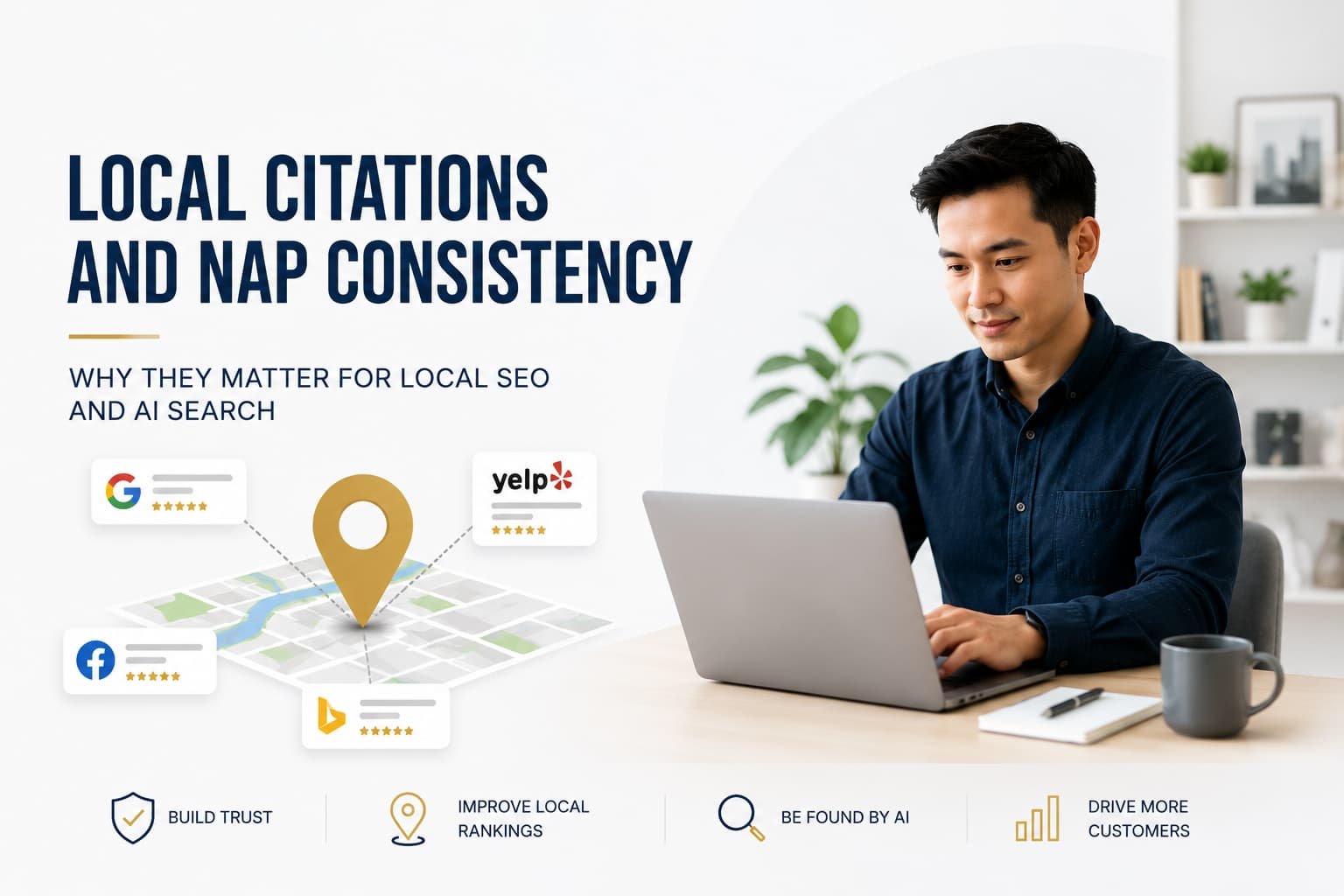
A citation is any online mention of your business name, address, and phone number (NAP), and consistency across every citation is a foundational trust signal for both Google’s local algorithm and AI search tools. Citations have declined somewhat as a pure local-pack ranking factor over the years as Google leans more on behavioral and profile signals, but they’ve taken on renewed importance for AI visibility: mentions and citations function as “the new link” in AI SEO, and a majority of top AI visibility factors are citation-related. This topic has enough depth to deserve its own breakdown, including how structured citations function as semantic triples that help LLMs verify and cite your business confidently, see Local Citations and NAP Consistency: Why They Matter for Local SEO and AI Search for the full guide. The short version: audit your existing citations before building new ones, and make sure every listing, from major data aggregators down to niche industry directories, matches your Google Business Profile exactly.

On-Page and Website Signals for Local SEO

Your website still matters as a ranking factor. On-page signals for local search include your city and service area named naturally in page titles, headings, and body copy, a dedicated page for each service you offer, your NAP repeated consistently in the footer of every page, and content that clearly and specifically describes what you do and where you operate. A generic homepage that never mentions a location or specialty makes it harder for both Google and AI-driven answer engines to confidently match you to a local search.

Local Landing Pages and Location Pages

A business serving multiple cities or a defined service area benefits from a dedicated landing page per location or service, rather than one page trying to rank for everything. Each page should include locally specific content, not a copy-pasted template with the city name swapped out, since thin, duplicated location pages tend to underperform and can even work against you. Real local detail, neighborhoods served, local landmarks, project photos from that specific area, gives both search engines and readers something genuine to work with instead of a template that could describe any city in the country.

Site Speed, Mobile-Friendliness, and Technical SEO

A slow-loading or hard-to-use-on-mobile website works against every other local SEO effort, since most local searches happen on a phone and a frustrating experience sends visitors right back to the search results. Fast load times, a mobile-responsive design, working internal links, and clean, crawlable site structure are table stakes rather than differentiators at this point, but a site that’s neglected them can quietly undercut the impact of otherwise-strong local ranking factors. A basic technical check, page speed, broken links, mobile usability, is worth revisiting periodically even if it isn’t the most exciting part of local SEO.

Backlinks remain a ranking factor for local SEO, but the most valuable ones tend to be locally relevant rather than simply high-authority: a mention from the local Chamber of Commerce, a sponsorship or event write-up from a community organization, a feature from a local news outlet, or a link from an industry association specific to your field.

Sponsoring a local event, joining your Chamber of Commerce, contributing expertise to a local news story, or partnering with complementary (non-competing) local businesses for cross-promotion all tend to earn the kind of locally relevant links that support both traditional rankings and the topical, geographic signals AI tools look for when deciding who to recommend. A few approaches that consistently work: offering a genuine expert quote when a local reporter is looking for a source, sponsoring a youth sports team or community fundraiser that naturally lists sponsors on its own site, getting listed on your local Chamber of Commerce or Better Business Bureau member directory, and building simple co-referral relationships with businesses that serve the same customers without competing directly, a roofer and a gutter company, for example, or a dentist and an orthodontist. Volume matters less here than relevance: a handful of genuinely local, genuinely earned links outperforms a large batch of generic, non-local backlinks.

Behavioral Signals: Clicks, Calls, and Direction Requests

Google Business Profile Insights tracks how customers found you and what they did next: calls, direction requests, website clicks, and whether they came from a direct, discovery, or branded search. These behavioral signals feed back into prominence over time, a profile that consistently earns clicks and calls looks more trustworthy than one that gets impressions but no engagement. This is also why a complete, appealing profile (photos, accurate hours, a clear description) matters beyond raw completeness, it directly affects whether people act once they see you.

You can influence these signals more directly than it might seem. A profile with a clear, working click-to-call button, accurate hours (especially on holidays, when out-of-date hours are a common source of lost calls), and photos that actually show your work rather than generic stock imagery all make it easier for a searcher to take the next step instead of bouncing back to the results page. Keeping your Products or Services list current and your description specific about what you actually do, rather than generic marketing language, reduces the odds someone clicks through expecting something you don’t offer, which hurts engagement quality even when it doesn’t hurt raw click volume.

Schema Markup and Structured Data

LocalBusiness or Service schema markup on your website spells out your NAP, category, service area, and hours in a format search engines and LLMs are both built to parse directly, reinforcing the same facts your citations already establish. It doesn’t replace the underlying content and citation work, but it removes ambiguity for machines trying to confirm what your business is and where it operates, which supports both classic local pack rankings and AI-driven visibility.

Beyond the core LocalBusiness fields (name, address, phone, hours, priceRange, service area), a few additional schema types are worth adding as they apply: Review or AggregateRating schema so your star rating can display directly in search results, FAQPage schema on pages with a genuine FAQ section (like the one on this page), and Service schema for individual service pages so each one clearly states what it covers. None of this is difficult to implement once, and it’s the kind of one-time technical investment that keeps paying off as AI tools increasingly parse structured data directly rather than inferring facts from unstructured page text.

How AI Overviews and LLMs Are Reshaping Local Ranking Factors

AI Overviews and LLM-based assistants (ChatGPT, Gemini, Perplexity, Google’s AI Mode) are quickly becoming a mainstream way people find and vet local businesses. 45% of consumers now use AI tools for local business recommendations, up sharply from just 6% in 2025, and AI has become the third most-used tool for local business recommendations overall, behind only Google and Facebook, and ahead of Yelp and TripAdvisor.

The underlying signals haven’t changed as much as the interface has. AI tools still lean on the same foundation: your Google Business Profile, your reviews, your citations, and how clearly your website and schema markup describe your business. What’s different is how much they reward consistency and corroboration across independent sources before they’re willing to state a fact confidently.

That shift also changes what “ranking” even means. A local pack listing is a single, ordered result set, you’re either in the top three or you’re not. An AI Overview or a chatbot answer is a synthesized recommendation, and a business can be mentioned, described accurately, and recommended even without holding the literal number-one organic position, provided the underlying signals (profile completeness, review sentiment, consistent citations, structured data) give the AI enough confidence to name you. That’s good news for smaller, well-optimized local businesses that may never outrank a national chain on price or scale, but can absolutely earn a confident, specific AI recommendation by being the most clearly documented, most consistently described option in their area.

Semantic Triples and Structured Citations

This is where citation consistency and structured data stop being a “nice to have” and start being the mechanism AI visibility runs on. A structured citation, a directory listing with your name, address, and phone number in labeled fields, is functionally already a semantic triple: a business paired with a specific, verifiable attribute and value. When that same triple appears identically across dozens of independent citations and your own site’s schema markup, an LLM has exactly the kind of corroborating evidence it needs to cite your business with confidence. See the full breakdown in Local Citations and NAP Consistency. This is part of why optimizing for LLMs and traditional search engines is one connected local SEO offering at Lift SEO Services rather than two separate projects, see AEO, GEO, and SEO for more on how we approach AI-driven search alongside traditional Google results.

Local SEO Ranking Factors Checklist

A short, practical starting point for working through the factors above in order of typical impact:

  • Claim and fully complete your Google Business Profile: accurate primary and secondary categories, all applicable attributes, current hours, and real photos
  • Post to your Google Business Profile regularly and keep your Products/Services list and Q&A section current
  • Build a repeatable process for asking every satisfied customer for a review, and respond to every review within a few days
  • Audit your existing citations for NAP consistency before building any new ones
  • Make sure every page on your site names your service area and specific services clearly, not just your homepage
  • Add a dedicated, genuinely local landing page for each city or service area you serve, if you serve more than one
  • Check your site’s mobile experience and load speed, since most local searches happen on a phone
  • Pursue a handful of genuinely local backlinks (Chamber of Commerce, local press, community sponsorships) rather than a large volume of generic ones
  • Add LocalBusiness or Service schema markup, plus Review and FAQPage schema where applicable
  • Keep every one of these consistent and current over time, local SEO rewards ongoing maintenance, not a one-time setup

Want to Know Where You Actually Stand on These Factors?

We’ll show you exactly how your Google Business Profile, reviews, citations, and site signals compare, in traditional search and in AI answers, no obligation.

Frequently Asked Questions

What are the three primary ranking factors for local SEO?

Google states its local ranking framework as three factors: relevance (how well your profile matches the search), distance (how close you are to the searcher), and prominence (how well-known and well-reviewed your business is). Prominence is where most controllable ranking factors, like reviews, citations, and links, actually live.

What is the most important local SEO ranking factor?

Your Google Business Profile has the single biggest impact, since it directly populates the local pack and Google Maps. A complete, accurate, actively maintained profile influences relevance and prominence at the same time, and it’s also the primary source AI Overviews and LLMs pull from for local recommendations.

How do reviews affect local search rankings?

Review count, average rating, and recency all factor into prominence, and they directly affect whether a searcher converts once they find you. 68% of consumers now require at least 4 stars before using a business, and 74% only weigh reviews written in the last three months, so both volume and freshness matter.

Does NAP consistency still matter for local SEO?

Yes, and it matters for a second reason now too. Consistent NAP data across citations remains a core local pack ranking signal, and it’s also become one of the clearest ways AI Overviews and LLMs verify and confidently cite a business. See our full guide on local citations and NAP consistency for more.

How much does proximity affect local search results?

Distance is one of Google’s three core local ranking factors and it’s largely outside your control, you can’t move your business closer to every searcher. What you can control is making sure your service area and address data are accurate and complete, so Google can match you correctly to searchers within your actual reach.

Is SEO dead now that AI Overviews and LLMs exist?

No. AI Overviews and LLM assistants still rely on the same underlying signals local SEO has always focused on, your Google Business Profile, reviews, citations, and website content, they’re just a new destination for that same work to pay off. Ignoring traditional local SEO would mean losing visibility in both places, not just one.

What are behavioral signals in local SEO?

Behavioral signals are the actions searchers take after finding your profile, calls, direction requests, and website clicks. Google Business Profile Insights tracks these, and a profile that consistently earns engagement, not just impressions, builds prominence over time.

Does Lift SEO Services optimize for all of these ranking factors?

Yes. Every local SEO engagement at Lift SEO Services covers Google Business Profile management, review strategy, citation and NAP consistency, on-page and schema work, and link signals, built to support traditional rankings and AI-driven visibility together rather than as separate projects.

What’s the difference between on-page and off-page local SEO factors?

On-page factors are the ones you control directly on your own website: page titles, service and city mentions, content depth, site speed, and schema markup. Off-page factors happen elsewhere: your Google Business Profile, reviews, citations, and backlinks. Both matter, and neither compensates fully for weakness in the other, a great website with no reviews or citations struggles just as much as a well-cited business with a thin, generic website.

How do I do a local SEO audit?

Work through the factors in this guide in order: check your Google Business Profile for completeness and accuracy, review your rating, volume, and recency across platforms, audit your top citations for NAP consistency, confirm your website clearly names your services and service area with reasonable site speed, and check whether you have basic LocalBusiness schema in place. The checklist above is a practical starting point, or we can run a full audit for you and show you exactly where you stand.

Lift SEO Services

Serving Bowling Green, KY, Nashville, TN, and surrounding areas

(615) 499-6013

Not ranking where your customers are searching?

Talk to our SEO specialist team. No obligation, no pressure.
HC

Written by Heather Cumens at Lift SEO Services

Bowling Green, KY, serving healthcare and home service businesses across Kentucky and Nashville, TN.

Local Citations and NAP Consistency: Why They Matter for Local SEO and AI Search

local citations and nap consistency lift seo services bowling green ky nashville tn

Local Citations and NAP Consistency: Why They Matter for Local SEO and AI Search

Lift SEO Services · Updated July 2026 · 9 min read
local citations and nap consistency lift seo services bowling green ky nashville tn

A local citation is any online mention of your business name, address, and phone number, and getting that information consistent everywhere is one of the oldest local SEO fundamentals there is. It’s also becoming one of the most important signals for a newer problem: helping LLMs and AI Overviews find, trust, and correctly recommend your business.

TL;DR: A local citation is any mention of your business’s name, address, and phone number (NAP) on a directory, platform, or data aggregator. Consistency across every citation, matching your Google Business Profile exactly, is what builds trust with both Google’s local algorithm and AI search tools. Structured citations, the kind stored as discrete labeled fields rather than a plain-text mention, function like semantic triples: machine-readable facts that LLMs can read, verify, and cite confidently when someone asks an AI assistant for a local recommendation.

80% of consumers lose trust in a business after seeing incorrect or inconsistent contact details online Source: BrightLocal, Local Citations Trust Report, 2026
68% would stop using a business after finding incorrect information on a directory listing Source: BrightLocal, Local Citations Trust Report, 2026

What Are Local Citations?

A local citation is any online mention of your business name, address, and phone number, commonly shortened to NAP. That mention can live on a general directory like Yelp, an industry-specific listing, a data aggregator, the local Chamber of Commerce, a review platform, or a map service. Your Google Business Profile is technically a citation too, and the most important one, since it feeds directly into the Google local pack and Google Maps.

Citations do two jobs at once. For search engines, a large, consistent set of citations is a trust signal: if dozens of independent sources agree on your business’s name, address, and phone number, that agreement is hard to fake, and Google treats it as evidence your business is legitimate and correctly located. For AI Overviews and LLM-based assistants, that same consistency is what makes it safe to cite your business by name in an answer, more on that below.

Structured vs. Unstructured Citations

Not every citation is built the same way, and the distinction matters for both traditional SEO and AI visibility.

Structured vs. Unstructured Local Citations
FactorStructured CitationUnstructured Citation
FormatDiscrete, labeled fields (Name field, Address field, Phone field)Free-text mention inside an article, review, or press piece
Where it livesBusiness directories, data aggregators, GBP, Yelp, industry listingsNews articles, blog posts, social media mentions, forum posts
Machine readabilityHigh, easy for search engines and LLMs to parse and verifyLower, requires natural language understanding to extract
Best forEstablishing verifiable, consistent NAP data at scaleBuilding brand awareness and topical relevance
Relationship to semantic triplesFunctionally already triple-shaped (entity, attribute, value)Not inherently structured, though schema markup can add structure

Both types have value, but structured citations are the ones doing the heavy lifting for local pack rankings and for AI search visibility, since they’re the easiest for a machine to confidently read.

Why NAP Consistency Is the Foundation of Local Citations

Consistency matters more than volume. If your phone number is formatted one way on your website, another way on Yelp, and a third way on an industry directory, every system reading that data, human or machine, has to guess which version is correct. That uncertainty weakens trust in your listings across the board.

The consumer research backs this up directly: 80% of people lose trust in a business after seeing incorrect or inconsistent contact details online, and 68% say they’d stop using a business after finding incorrect information on a directory listing. Before building new citations, audit and correct the ones you already have. A short, accurate list of citations that all match your Google Business Profile exactly will consistently outperform a long list full of conflicting information.

How Local Citations Affect Your Local SEO Rankings

Citations have been a foundational local ranking factor for years, and recent industry research shows their role is shifting rather than disappearing. Whitespark’s 2026 Local Search Ranking Factors Report found that citation consistency has slipped somewhat as a weight in the traditional Google local pack algorithm compared to previous years. At the same time, the same report flags renewed importance for citations in a different context: AI search visibility, where the report describes mentions and citations as “the new link,” noting that three of the top five ranking factors for AI visibility are citation-related.

In practical terms, that means citations haven’t gotten less important, they’ve become important for a second reason. A clean, consistent citation profile still supports your local pack and Maps rankings, and it’s now also one of the clearest ways to earn visibility in AI Overviews and LLM-generated local recommendations.

Semantic Triples: How Structured Citations Help LLMs Understand Your Business

A semantic triple is a simple way of representing a fact as three parts: a subject, a predicate, and an object, for example, [Your Business]has phone number(615) 499-6013. This is the underlying structure behind knowledge graphs, schema.org markup, and increasingly, how LLMs assemble a confident answer about a local business. It’s also, not coincidentally, exactly what a structured citation already is: a business name paired with a specific, labeled attribute and value.

When your NAP data is identical across every structured citation, Google Business Profile, Yelp, industry directories, data aggregators, and your own website’s schema markup, you’re effectively publishing the same set of semantic triples in dozens of independently verifiable places. That redundancy is exactly what an AI system looks for before it’s willing to state a fact confidently: if ten independent sources agree your business is at the same address with the same phone number, an LLM can cite that information with much higher confidence than if it only has one unverified mention to go on.

NAP as a Semantic Triple

Concretely, a well-built citation profile is already producing structured facts like these, repeated consistently everywhere your business is listed:

  • [Business Name]hasAddress[Street, City, State, ZIP]
  • [Business Name]hasTelephone[Phone Number]
  • [Business Name]hasCategory[Primary Service or Specialty]
  • [Business Name]servesArea[City or Region]

Pairing that consistency with LocalBusiness or Service schema markup on your own website reinforces the same triples in a format search engines and LLMs are both built to parse directly, which is part of why optimizing for LLMs and traditional search engines is one connected local SEO offering at Lift SEO Services rather than two separate projects. See AEO, GEO, and SEO for more on how we approach AI-driven search alongside traditional Google results, and our Local SEO for Small Business page for how citation work fits into a full local SEO engagement.

Where to Build and Manage Local Citations

Start with the citation that matters most: your Google Business Profile, since it’s the primary source both Google’s local algorithm and AI Overviews pull from. From there, prioritize the handful of broad, high-authority general directories (Yelp, Apple Maps, Bing Places, Facebook), the major data aggregators that redistribute your NAP data to dozens of smaller sites automatically, and any directory specific to your industry (healthcare-specific directories for medical practices, trade-specific directories for home service businesses).

Citation Management Tools and Data Aggregators

A handful of established tools exist specifically to help businesses build and monitor citations at scale, among them Moz Local, BrightLocal, Whitespark, and Yext. Each takes a slightly different approach (citation building, citation tracking and auditing, or direct data aggregator distribution), but the goal is the same: get consistent NAP data into as many verifiable, structured places as possible, and catch inconsistencies before they spread further.

How to Do a Local Citation Audit

  1. Search your business name and phone number to surface citations you may not know exist, including old or duplicate listings.
  2. Compile every citation you find into a single list, noting the exact name, address, and phone number shown on each one.
  3. Compare each listing against your Google Business Profile, since that should be your source of truth for NAP formatting.
  4. Flag every inconsistency, a missing suite number, an old phone number, an abbreviated street type, anything that doesn’t match exactly.
  5. Correct or claim each listing, prioritizing your highest-authority citations first (Google, major aggregators, industry-specific directories).
  6. Remove or merge duplicate listings rather than leaving both live, duplicates create the exact inconsistency you’re trying to eliminate.

Fixing and Preventing NAP Inconsistencies

  • Pick one exact NAP format (including abbreviations like “St.” vs. “Street”) and use it everywhere, starting with your Google Business Profile
  • Audit existing citations before building new ones, fixing what’s wrong outweighs adding more volume
  • Correct old addresses and phone numbers immediately after a move or number change, across every listing, not just your website
  • Remove or merge duplicate listings rather than leaving multiple versions live
  • Add matching LocalBusiness or Service schema markup to your website so your own site reinforces the same NAP data
  • Re-check your top citations periodically, data aggregators occasionally reintroduce outdated information
  • Keep a single internal record of your official NAP format so anyone updating listings uses the same source of truth

Local Citations for Multi-Location and Service-Area Businesses

Citation management gets more complex once more than one location or provider is involved. A healthcare practice with multiple providers, or a home service business covering several cities, needs every location or service area represented accurately and separately, without letting listings blur together or duplicate. Manage every location through one account rather than scattered individual logins, and keep category and NAP formatting consistent across locations even as service area and contact details change per site. See Healthcare SEO Services and SEO for Home Service Businesses for guidance specific to each vertical, and what local SEO is and why it matters for healthcare and home service businesses for the fundamentals this article builds on.

Not Sure How Consistent Your Citations Are?

We’ll audit your NAP data across your top citations and show you exactly what’s inconsistent, no obligation.

Frequently Asked Questions

What are local citations in SEO?

A local citation is any online mention of your business name, address, and phone number, on directories, industry listings, data aggregators, or your Google Business Profile. Consistent citations help both search engines and AI tools trust and correctly represent your business.

What does NAP consistency mean, and why does it matter?

NAP consistency means your business name, address, and phone number are formatted identically everywhere they appear online. It matters because mismatched information erodes trust, 80% of consumers lose trust in a business after seeing incorrect or inconsistent contact details, and it makes it harder for Google and AI tools to confidently verify your business.

What’s the difference between structured and unstructured citations?

A structured citation stores your NAP data in discrete, labeled fields, like a directory listing or your Google Business Profile, making it easy for machines to read and verify. An unstructured citation is a free-text mention, like a news article referencing your business by name, which is harder for automated systems to parse precisely.

What are semantic triples, and how do they relate to local citations?

A semantic triple represents a fact as a subject, predicate, and object, for example, a business paired with its phone number. A structured citation is already shaped like a semantic triple. When the same NAP triples appear consistently across many independent citations, LLMs and AI Overviews can verify and cite that information with much higher confidence.

How do local citations affect AI Overviews and LLM search results?

AI Overviews and LLM-based assistants look for corroborating, consistent facts before confidently recommending a business. A wide, consistent set of structured citations gives them exactly that, according to Whitespark’s 2026 ranking factors research, citation-related signals now make up three of the top five factors in AI search visibility.

Where should I build citations first?

Start with your Google Business Profile, since it’s the primary source Google’s local algorithm and AI Overviews both pull from. From there, prioritize major general directories, the data aggregators that redistribute NAP data automatically, and any directory specific to your industry.

How do I run a local citation audit?

Search your business name and phone number to surface every existing citation, compile the results into a list, compare each one against your Google Business Profile, flag every inconsistency, and correct or merge listings starting with your highest-authority citations.

Does Lift SEO Services manage citations and NAP consistency as part of local SEO?

Yes. Citation auditing and NAP consistency are part of every local SEO engagement at Lift SEO Services, built alongside schema markup and Google Business Profile management so your business is represented identically everywhere, for traditional search engines and for LLMs and AI Overviews.

Lift SEO Services

Serving Bowling Green, KY, Nashville, TN, and surrounding areas

(615) 499-6013

HC

Written by Heather Cumens at Lift SEO Services

Bowling Green, KY, serving healthcare and home service businesses across Kentucky and Nashville, TN.

Not ranking where your customers are searching?

Talk to our SEO specialist team. No obligation, no pressure.
Local SEO and Google Business Profile: The Complete Optimization Guide

Local SEO and Google Business Profile The Complete Optimization Guide Lift SEO Services Bowling Green KY Nashville TN

Local SEO and Google Business Profile: The Complete Optimization Guide

Lift SEO Services · Updated July 2026 · 9 min read
Local SEO and Google Business Profile The Complete Optimization Guide Lift SEO Services Bowling Green KY Nashville TN

Google Business Profile (still widely searched for under its old name, Google My Business) is the single biggest lever a small business has for local SEO. This guide covers everything from setup to advanced optimization, reviews, service areas, and how the same profile now feeds AI search results too.

TL;DR: Google Business Profile (formerly Google My Business) is the free listing that controls whether your business shows up in the Google local pack, Google Maps, and increasingly, AI Overviews and LLM answers. Optimizing it means filling out every field completely, choosing the right categories, adding real photos, posting regularly, and actively managing reviews. It’s one part of local SEO, not the whole strategy, but it’s the part with the biggest immediate impact for a small business.

+42% more requests for directions on profiles that include photos Source: Google Business Profile Help
+35% more website clicks on profiles that include photos Source: Google Business Profile Help

What Is Google Business Profile (Formerly Google My Business)?

Google Business Profile is the free tool that controls how your business appears across Google Search and Google Maps: your name, address, phone number, hours, category, photos, reviews, and posts. If your business shows up on the right side of a Google Search result with a map, star rating, and “Call” or “Directions” button, that’s your Google Business Profile.

Why Google Renamed Google My Business to Google Business Profile

In 2021, Google retired the standalone Google My Business app and rebranded the product as Google Business Profile. Profiles are now managed directly from Google Search and Google Maps, or through Business Profile Manager, rather than a separate app. Both names still get searched constantly, and both refer to the same underlying listing, so this guide uses them somewhat interchangeably, the way most business owners actually search for the topic.

How Google Business Profile Powers Local SEO

Local SEO is the broader discipline. Google Business Profile is the single most influential piece of it. Google’s local ranking algorithm weighs three main factors when deciding which businesses to show for a local search:

  • Relevance: how well your profile and website match what the searcher is looking for
  • Distance: how close your business (or your service area) is to the searcher or the location they specified
  • Prominence: how well-known and well-reviewed your business is, both on Google and across the web

The Google Local Pack and Map Pack Explained

The “local pack” (sometimes called the map pack) is the block of three business listings, with a map, that appears above regular search results for local queries. It’s built almost entirely from Google Business Profile data. A business with an incomplete or unclaimed profile is rarely eligible to appear there, no matter how good its website is.

Is Google Business Profile Free?

Yes. Creating, claiming, and optimizing a Google Business Profile costs nothing, there’s no fee to Google for any part of it. What people are often really asking is one of two different things:

Free: Organic Optimization

Filling out your profile, adding photos, posting updates, and earning reviews doesn’t cost anything except time. This is what most of this guide covers.

Paid: Local Services Ads

Google also sells paid placements above the organic local pack (Local Services Ads and Google Ads). Those are a separate, paid product from your free Business Profile listing, and worth budgeting for separately if you use them.

If you’re paying an agency or freelancer, you’re paying for their time and expertise managing the free listing well, not for the listing itself. See the cost breakdown on our Local SEO for Small Business page for typical monthly investment ranges.

How to Claim and Set Up Your Google Business Profile

  1. Search for your business on Google to see if a profile already exists (sometimes Google auto-generates one from third-party data).
  2. Claim or create the profile at google.com/business, using an email address your business controls, not a personal freelancer or agency account you might lose access to later.
  3. Verify your business. Google typically verifies by postcard, phone, email, or video, depending on your business type and category.
  4. Fill out every available field before publishing: category, hours, phone, website, service area or address, and business description.
  5. Add your team as managers if more than one person needs access, rather than sharing a single login.
Set up a new google business profile lift seo services bowling green ky nashville tn

Google Business Profile Optimization Checklist

Once your profile is verified, optimization is about completeness and consistency. Here’s what to work through, roughly in order of impact:

Categories and Attributes

Choose the single most accurate primary category, then add every relevant secondary category. Attributes (like “wheelchair accessible,” “free estimates,” or “women-owned”) add further detail that helps Google match your profile to specific searches, and they show up directly on your listing for searchers to see.

Services and Business Description

List every service you actually offer, not just a headline description. The business description field is a chance to naturally include your service area and specialties in plain language, written for people, not stuffed with keywords.

Photos

Add real, current photos: the exterior and interior, your team, vehicles or equipment, and completed work. As the stats above show, profiles with photos get meaningfully more direction requests and website clicks. Update photos periodically rather than uploading once and never returning.

Posts

Google Business Profile Posts work similarly to a short social media update: a promotion, a new service, a seasonal reminder, or a recent project. Posts don’t carry the reach of a dedicated social platform, but they signal an active, maintained profile, which supports local rankings, and they give searchers a reason to engage right there in the search result.

Service Areas

If customers come to you, use a physical address. If you go to customers (a common setup for home service businesses), set a service area instead of, or in addition to, a public address, and list every city or region you actually serve. An overly broad service area that doesn’t reflect where you really work can hurt relevance rather than help it.

Want Us to Audit Your Google Business Profile?

We’ll show you exactly what’s missing, no obligation.

Getting and Managing Google Reviews

Reviews affect both your local pack ranking and whether a searcher actually calls you. A simple, repeatable ask, at the moment a job or appointment wraps up, outperforms occasional bulk review campaigns. A few practical guidelines:

  • Ask in person or by text/email right after a positive interaction, while it’s fresh
  • Never offer payment or discounts in exchange for a review, this violates Google’s policies and can get reviews removed
  • Respond to every review, positive and negative, within a few days
  • For a negative review, respond calmly and professionally, acknowledge the concern, and move the specifics offline rather than arguing in public

How Google Business Profile Compares to Other Channels

Google Business Profile vs. Yelp

Google Business Profile vs. Yelp for Local SEO
FactorGoogle Business ProfileYelp
CostFreeFree basic listing, paid ads available
Where it shows upGoogle Search, Google Maps, local pack, AI OverviewsYelp app/site, sometimes surfaced in Google results
Direct SEO impactPrimary input to Google’s local pack rankingsIndirect, functions more as a citation and review source
ReviewsDirectly visible in Google search resultsVisible on Yelp, influential in some industries (restaurants, home services)
RecommendationRequired, optimize fullyWorth claiming and keeping accurate for citation consistency

Google Business Profile Posts vs. Social Media Posts

Posts on your Google Business Profile and posts on Instagram or Facebook serve different purposes. Social posts build a following and reach people who already know you. Google Business Profile Posts reach people actively searching for what you do, right at the moment they’re deciding who to call. They’re worth doing both, but don’t assume one replaces the other.

Local SEO vs. Organic SEO

Google Business Profile optimization is a local SEO tactic specifically, it doesn’t directly move your rankings for broad, non-local, organic search terms. The two disciplines overlap (a well-built website supports both) but they target different search results and different searcher intent. For a full breakdown of local versus national/organic SEO strategy, see our Local SEO for Small Business guide, or start from the fundamentals in what local SEO is and why it matters.

Google Business Profile for Service-Area Businesses

Plumbers, electricians, roofers, and HVAC companies typically don’t want customers showing up at a home office or warehouse, so Google Business Profile lets you hide your address and instead define a service area. Set this to reflect where you genuinely, reliably operate, a service area that’s too large relative to your actual footprint tends to dilute relevance for the areas that matter most. Category selection matters even more for service-area businesses since there’s no storefront to reinforce what you do. See SEO for Home Service Businesses, Plumber SEO Company vs. DIY, and Roofing SEO Company for more on this vertical.

Multi-Location and Healthcare Practice Profiles

A healthcare practice with multiple providers or locations needs a Google Business Profile strategy of its own: a profile for the practice itself, and in many cases, individual provider profiles as well, all kept consistent on NAP and category. Multi-location businesses should manage every location through one Business Profile account (never separate personal logins per location) and keep categories, hours, and descriptions consistent across every profile, while still localizing content like service area and photos per site. See Healthcare SEO Services, SEO for Doctors, and Medical SEO Company vs. In-House for healthcare-specific guidance.

Common Google Business Profile Mistakes to Avoid

  • Leaving the profile unclaimed, letting Google or a third party control what’s shown
  • Choosing an inaccurate primary category to try to rank for unrelated searches
  • Letting NAP (name, address, phone) drift out of sync with your website and citations
  • Buying or incentivizing fake reviews
  • Ignoring negative reviews instead of responding professionally
  • Setting an unrealistically large service area
  • Uploading a handful of photos once and never updating them
  • Sharing one login across an agency, staff, and past employees with no access control

Tracking Results with Google Business Profile Insights

Business Profile Manager includes built-in performance data: how customers found you (direct, discovery, or branded search), what actions they took (calls, direction requests, website clicks), and how your photos compare to similar businesses. Website traffic from your profile typically shows up in Google Analytics as a referral or direct session depending on how it’s tracked, so it’s worth checking both Business Profile Insights and your website analytics together rather than either one alone.

Google Business Profile and AI Search

The same profile data that feeds the Google local pack is also a primary source for AI Overviews and LLM-based answers (ChatGPT, Gemini, Perplexity) when someone asks for a local recommendation. A complete, accurate, well-reviewed Google Business Profile helps you get cited correctly in both. This is part of why optimizing for LLMs and traditional search engines is built into our local SEO offering at Lift SEO Services, rather than treated as a separate project. See AEO, GEO, and SEO for more on how we approach AI-driven local search.

Frequently Asked Questions

How do I do local SEO for my Google Business Profile?

Claim and verify your profile, choose accurate categories, fill in every field completely, add real photos, post updates regularly, and build a consistent flow of reviews. Pair that with matching NAP details across your website and citations for the biggest local SEO impact.

Can I optimize my Google Business Profile myself, or should I hire someone?

You can absolutely do the basics yourself: claiming the profile, filling in fields, and asking for reviews. Where a local SEO company typically adds value is consistency over time, category and attribute strategy, review response, and coordinating the profile with the rest of your website and citations.

Is Google Business Profile free?

Yes, creating and optimizing a Google Business Profile is free. Google separately sells paid placements like Local Services Ads and Google Ads, which are a different product from the free organic listing.

How much does Google Business Profile optimization cost if I hire help?

The listing itself is free, so any cost you pay covers a person’s or agency’s time managing and improving it. See our Local SEO for Small Business page for typical monthly local SEO pricing ranges.

What replaced Google My Business?

Nothing replaced it, Google renamed it. In 2021, Google My Business became Google Business Profile, and the standalone app was retired in favor of managing listings directly from Google Search and Google Maps.

Is Google Business Profile worth it for a small business?

Yes, for almost any business that serves local customers. It’s free, it’s the main input to the Google local pack, and it’s often the first thing a potential customer sees about your business before they ever visit your website.

Do Google Business Profile posts actually help SEO?

Posts alone are a minor ranking factor, but an actively maintained profile, which regular posting is part of, correlates with stronger local performance. Posts also give searchers something current and relevant to see right in the search result, which supports clicks and calls even if the direct ranking effect is modest.

Does Lift SEO Services optimize Google Business Profile for AI search too?

Yes. We build every Google Business Profile and local SEO engagement to support both traditional search engines and LLMs, since AI Overviews and AI assistants pull from the same profile, review, and citation signals that power the Google local pack.

Ready to Fix Your Google Business Profile?

Lift SEO Services builds and manages Google Business Profiles as part of a full local SEO strategy for healthcare practices and home service businesses. Let’s talk about what your profile is missing.

Lift SEO Services

Serving Bowling Green, KY, Nashville, TN, and surrounding areas

(615) 499-6013

Not ranking where your customers are searching?

Talk to our SEO specialist team. No obligation, no pressure.

HC

Written by Heather Cumens at Lift SEO Services

Bowling Green, KY, serving healthcare and home service businesses across Kentucky and Nashville, TN.

Healthcare Marketing vs. SEO: What’s the Difference

Healthcare Marketing vs. SEO Lift SEO Services Bowling Green Nashvile

Healthcare Marketing vs. SEO: What’s the Difference

Lift SEO Services · Updated July 2026 · 9 min read
Healthcare Marketing vs. SEO Lift SEO Services Bowling Green Nashvile

Practice administrators researching marketing options run into this constantly: is SEO part of healthcare marketing, or a separate thing entirely? The terms get used almost interchangeably in sales calls and agency pitches, which makes it hard to know what you’re actually buying — or what’s missing.

Here’s a clear breakdown of what separates healthcare marketing from SEO medical marketing specifically, where they overlap, and why most practices end up needing both rather than choosing one.


Table of Contents

What Is Healthcare Marketing?

Healthcare marketing is the broad umbrella: everything a practice does to build awareness, communicate its services, and bring in new patients. That includes paid advertising, email and text campaigns, social media, print and community outreach, branding, and yes, SEO. Healthcare marketing is the “what are we saying and to whom” layer — the strategy and messaging that everything else supports.

What Is Medical SEO?

Medical SEO — sometimes searched as “SEO medical marketing” or “medical marketing SEO” — is one specific channel inside that broader umbrella. It’s the practice of optimizing a healthcare website and online listings so the practice shows up organically (unpaid) when patients search for the services it offers. Where healthcare marketing asks “what should we say,” medical SEO asks “how do we make sure Google finds and trusts what we’ve said.”

Healthcare Marketing vs. SEO: Key Differences

Healthcare Marketing vs. Medical SEO
Factor Healthcare Marketing (Broad) Medical SEO (Specific Channel)
Scope Branding, ads, social, email, PR, SEO Organic search visibility specifically
Cost model Mix of paid media + retainer/agency fees Typically a standalone monthly retainer
Timeline Can produce fast results (paid ads) Builds gradually, compounds over time
Where it shows up Ads, social feeds, email inboxes, press Organic search results, Map Pack, AI Overviews
Ongoing cost once built Continues as long as campaigns run Lower marginal cost to maintain rankings

Neither one replaces the other. A practice that only runs paid healthcare marketing campaigns loses visibility the moment the budget stops. A practice that only does SEO misses the immediate reach that paid channels, social proof, and outreach provide.

Why You Need Both

SEO builds the durable foundation — a website and Google Business Profile that keep generating appointment requests without an ongoing per-click cost. Broader healthcare marketing (paid ads, social, email) fills the gaps SEO can’t: immediate visibility for a new practice or new service, direct communication with existing patients, and reach on platforms where patients spend time outside of search. Practices that treat these as one connected system, rather than separate line items competing for budget, tend to get more out of both.

What Are YMYL and E-A-T in Medical SEO?

YMYL (“Your Money or Your Life”) is Google’s classification for content that could impact a person’s health, financial stability, or safety — medical content falls squarely into this category. E-A-T (Expertise, Authoritativeness, Trustworthiness — often extended to E-E-A-T with “Experience”) is the framework Google’s quality rater guidelines use to evaluate YMYL content specifically. In practical terms, that means medical content held to a higher bar than most other industries: clear author credentials, board certifications displayed, and citations to credible sources, all of which matter for rankings and for the patient reading the page.

SEO vs. PPC for Patient Acquisition

Within the broader marketing mix, SEO and PPC (pay-per-click advertising) are often the two channels practices compare directly. PPC buys immediate placement at the top of search results, which is useful for launching a new service or building visibility fast, but that placement disappears the moment spending stops. SEO takes longer to establish but keeps producing appointment requests without a continuing per-click cost once it’s built. Most practices find the strongest results come from running both together rather than treating it as an either/or decision.

Healthcare Digital Marketing SEO Best Practices

  • Keep your Google Business Profile complete and actively updated, not just claimed once
  • Build dedicated pages per service and provider rather than one general page
  • Publish content that answers real patient questions, written or reviewed by qualified staff
  • Maintain consistent business information across every directory and listing
  • Treat reviews as an ongoing process, not a one-time push
  • Keep technical health (site speed, mobile usability, security) in good shape sitewide

Not ranking where your customers are searching?

Talk to our SEO specialist team. No obligation, no pressure.

SEO Checklist for a New Medical Clinic Website Launch

  1. Set up and fully complete the Google Business Profile before or immediately at launch
  2. Build out dedicated service and provider pages from day one, not as an afterthought
  3. Add accurate schema markup for the practice and its physicians
  4. Confirm all patient-facing forms and tracking are reviewed for HIPAA considerations
  5. Set up call and form tracking so results can actually be measured post-launch

Local SEO for Clinics and Hospitals

Local SEO looks different at different scales. A single clinic needs one well-optimized Google Business Profile and a handful of strong service pages. A hospital system needs a coordinated structure across departments and locations — individual pages and listings for each facility, each with its own local citations and reviews, tied back to a central hospital brand presence. The underlying mechanics are the same; the coordination required scales up considerably with size.

Content Marketing Ideas for Medical Websites

Strong content for a medical website answers the questions patients are already asking before they book: what to expect during a specific procedure, how to prepare for an appointment, what a diagnosis actually means in plain language, and when a symptom warrants a visit. This kind of content builds the topical authority and trust signals that support both SEO and the broader goal of patient education, which is part of why it works so well across both channels at once.

Patient Review Management Strategies

A workable review strategy has three parts: a consistent, HIPAA-aware process for asking patients to leave a review shortly after their visit, a routine for responding to reviews (positive and negative) in a professional, non-identifying way, and periodic checks that reviews are current across every platform patients actually use — not just Google. Practices that treat this as ongoing infrastructure, rather than a one-time campaign, tend to build a stronger and more current reputation over time.

Ethical Guidelines for Marketing a Medical Practice

Medical marketing carries obligations beyond what most industries deal with: claims about outcomes need to be accurate and not misleading, testimonials require proper patient consent, and content should never imply a guarantee of results. Many specialty boards and medical associations publish their own advertising guidelines on top of general legal requirements — worth reviewing directly for your specific specialty rather than assuming general marketing norms apply without modification.

HIPAA-Compliant Digital Marketing

The areas of digital marketing most likely to intersect with HIPAA: patient testimonials (which need documented authorization), and tracking technologies like analytics or ad pixels placed on pages where a patient might submit protected health information, such as an appointment request or patient portal login. This has been an active area of regulatory guidance in recent years, and it’s worth a direct conversation with your compliance officer or healthcare attorney before adding new tracking tools or testimonial content — this isn’t legal advice, just a starting point for that conversation.

In-House vs. Agency for Medical SEO

In-House Marketing Team vs. Medical SEO Agency
Factor In-House Team Medical SEO Agency
Skill coverage Depends entirely on who’s hired Team spanning content, technical SEO, local SEO
Healthcare-specific experience Varies widely Often built from work across multiple practices
Cost structure Salary and benefits — fixed overhead Monthly retainer, scalable with needs
Best fit for Large systems with dedicated marketing budget Most independent and small-to-midsize practices

Average Cost of SEO for Doctors

SEO costs for a medical practice scale with market competitiveness, the number of providers and locations involved, and how much technical and content work the current site needs. Rather than budget around a generic industry number, it’s worth getting a quote scoped to your actual market and current site.

Measuring ROI for Healthcare SEO

The metrics that actually matter for healthcare SEO: new-patient appointment requests generated from organic search and Google Business Profile combined, keyword rankings for the specific services a practice wants to grow, and organic traffic and visibility trends over time — all measured against the monthly cost of the work itself. Call tracking and form-source attribution make it possible to say confidently which new patients came from SEO specifically, rather than guessing.

Advanced SEO for a Hospital Marketing Team

For a hospital or multi-location system, SEO scales beyond what a single-practice checklist covers: coordinating structured data and location pages across dozens of facilities, managing SEO for both service lines (cardiology, orthopedics, etc.) and individual physicians at scale, and building internal processes so that new locations or providers get properly optimized as they’re added, rather than becoming an ongoing backlog. This is typically where an in-house team and an outside SEO partner work together rather than one replacing the other.

The Bottom Line

Healthcare marketing and SEO aren’t competing priorities — SEO is the durable, compounding channel inside a broader marketing strategy. If you’re weighing where to start or how the two should work together for your practice, our Healthcare SEO page walks through how we approach it.

76% of consumers who search for a local business visit within a day Source: Google, 2024

Not ranking where your customers are searching?

Talk to our SEO specialist team. No obligation, no pressure.

Is SEO part of healthcare marketing, or separate from it?

SEO is one channel inside the broader healthcare marketing umbrella, alongside paid ads, social media, email, and outreach. It’s often managed separately because it requires different, more technical expertise than other marketing channels.

Should a new practice start with SEO or paid ads?

Most new practices benefit from running both: paid ads for immediate visibility while SEO builds, since organic rankings take months to establish. Relying on paid ads alone means visibility disappears the moment spending stops.

Do solo practitioners need the same marketing approach as larger practices?

The fundamentals are the same, but scale and budget differ. A solo practitioner can often get strong local SEO results without a large broader marketing budget, since a complete Google Business Profile and a handful of well-built pages go a long way at that scale.

HC

Written by Heather Cumens at Lift SEO Services

Bowling Green, KY, serving healthcare and home service businesses across Kentucky and Nashville, TN.

Medical SEO Company vs. In-House: How to Choose the Right Approach

Medical SEO Company vs. In-House: How to Choose the Right Approach Lift SEO Services Bowling Green KY

Medical SEO Company vs. In-House: How to Choose the Right Approach

Lift SEO Services · Updated July 2026 · 9 min read
Medical SEO Company vs. In-House: How to Choose the Right Approach Lift SEO Services Bowling Green KY

Table of Contents

At some point, most practices with more than one provider or location hit the same question: hire a medical SEO company, build the work into an existing marketing hire’s plate, or bring on a dedicated in-house team. There’s no universally right answer — but there is a clear way to think through it.

This guide walks through what medical SEO companies actually do, how in-house compares, what to ask before you hire, the red flags worth knowing about, and how to evaluate everything from pricing to proposals before you sign anything.

What Is a Medical SEO Company?

A medical SEO company is an agency that specializes in improving how medical practices, clinics, and hospital systems show up in search results — as opposed to a general digital marketing agency that happens to take on healthcare clients alongside restaurants, law firms, and retail businesses. The distinction matters more than it sounds like it should: healthcare SEO carries its own rules around content accuracy (YMYL), patient privacy (HIPAA), and provider credentialing that a generalist agency may not be built to handle correctly.

A medical seo agency and a healthcare seo consultant are often the same kind of provider described two different ways — “agency” usually implies a full team and ongoing retainer, while “consultant” can mean a single specialist brought in for strategy, an audit, or a specific project. Both are worth considering depending on how much hands-on execution your practice actually needs.

What Services Do Medical SEO Experts Offer?

A full-service medical SEO company typically covers: Google Business Profile management for every provider and location, dedicated page content for each service and provider rather than one generic page, technical SEO (site speed, mobile usability, structured data and schema markup), local SEO and citation management, patient review generation and reputation management, and reporting that ties the work back to appointment requests rather than rankings alone. Some agencies bundle in web design or paid ads; others focus specifically on organic SEO and expect a practice to run paid channels separately or with a different partner.

It’s worth distinguishing this from medical content marketing agencies, which focus specifically on writing and content strategy without necessarily covering the technical SEO, citation, or Google Business Profile side. A practice that hires a content-only agency may still need a separate technical SEO partner — or a medical SEO company that covers both under one roof. Understanding exactly which of these are included in a given proposal, and which cost extra, matters more than comparing agencies on price alone.

In-House Marketing Team vs. Medical SEO Agency

Building SEO into an in-house marketing hire’s responsibilities is possible, but it trades off differently than hiring a specialized agency:

In-House Marketing Team vs. Medical SEO Agency
Factor In-House Hire Medical SEO Agency
Cost structure Salary, benefits, tools — fixed overhead Monthly retainer, scalable with scope
Skill coverage Limited to one person’s expertise Team spanning content, technical SEO, local SEO
Healthcare/HIPAA familiarity Depends entirely on the hire’s background Often built into the agency’s process from client work
Ramp-up time Hiring, onboarding, learning the market Existing playbook, generally faster to start
Best fit for Large systems with sustained marketing budget Most independent and small-to-midsize practices

For most independent practices and small groups, a medical SEO agency ends up more practical simply because it’s difficult for one in-house hire to cover content, technical SEO, local SEO, and reporting at a consistently high level all at once — an agency’s team already has that specialization built in. Larger health systems with an established, well-resourced marketing department are the exception, and often end up using both: an in-house team for strategy and brand, with a specialized SEO partner or healthcare SEO consultant supporting the technical and execution side.

What Is E-A-T, and Why It Matters When Choosing a Medical SEO Company

E-A-T (often extended to E-E-A-T with “Experience”) stands for Expertise, Authoritativeness, and Trustworthiness — the framework Google’s quality rater guidelines use to evaluate content, applied with extra weight to YMYL (“Your Money or Your Life”) topics like medical content. This matters directly when choosing a medical SEO company: an agency that understands E-A-T will build content around real provider credentials, cite credible medical sources, and avoid generic, unattributed health content — because that’s what both Google and patients are actually looking for. An agency that doesn’t mention E-A-T or YMYL at all during the sales process may not fully understand what makes healthcare SEO different from SEO in any other industry.

How to Choose a Medical SEO Company

Start with experience: has this company worked with medical practices specifically, not just local businesses in general? From there, look at how they report results (calls and appointment requests, not just keyword rankings), whether they build dedicated pages per service and provider, and how transparent they are about timeline and pricing before you sign anything. It’s also worth asking how they’re thinking about generative engine optimization (GEO) — as AI Overviews and AI chat tools increasingly summarize health information directly, the same fundamentals that support strong SEO (credentialed authorship, clear structure, real patient reviews) also help a practice show up in AI-generated answers. A company that can clearly explain its process, rather than just promising results, is usually the safer bet.

How to Evaluate a Medical SEO Proposal

When comparing proposals from different companies, look past the total monthly price to what’s actually being delivered for it: how many pages will be built or updated, whether Google Business Profile management is included or billed separately, what the reporting cadence looks like, and whether the proposal names specific, measurable deliverables rather than vague language like “ongoing optimization.” A proposal that clearly scopes deliverables month by month is easier to hold an agency accountable to than one that describes only a general strategy.

Checklist for Vetting a Potential Healthcare SEO Firm

Beyond general reputation, a structured vetting process protects you from a bad hire:

  • Ask for examples of work with other medical practices, not just general local business clients
  • Get a clear answer on what’s included in the monthly scope versus billed separately
  • Check whether you retain ownership of your website, content, and Google Business Profile access
  • Ask what reporting looks like, and how often you’ll actually see it

Questions to Ask Before Hiring

  1. Have you worked with medical practices or healthcare clients specifically?
  2. How do you report results — appointment requests and calls, or just rankings?
  3. Will each provider and service get its own dedicated page?
  4. How do you handle HIPAA considerations in testimonials and website tracking?
  5. What happens to my website and Google Business Profile access if I leave?
  6. Who actually does the work — your in-house team, or a subcontractor?

Red Flags to Watch For

  • Guaranteed #1 rankings or guaranteed patient volume — no legitimate agency can promise this
  • No mention of HIPAA or compliance considerations at all during the sales process
  • Vague or reluctant answers about what’s actually included in the retainer
  • Templated content reused across many medical clients with only the practice name changed
  • Long-term contracts with steep penalties for leaving, and no clear ownership of your assets

Medical SEO Companies for Providers

The fundamentals of medical SEO stay consistent across specialties, but the competitive landscape and content needs shift considerably. An SEO company for dentists needs to understand procedure-specific search behavior (implants, cosmetic dentistry, emergency care) and a highly competitive local market. Companies working with plastic surgeons need to navigate before-and-after content carefully, balancing visual proof with advertising guidelines specific to that specialty. A company specializing in addiction treatment centers deals with an especially sensitive content and privacy landscape, where patient anonymity and ethical marketing standards carry even more weight than in general medical SEO. When evaluating a medical SEO company for a specific specialty, ask directly whether they’ve worked in that specialty before — a generalist healthcare SEO background doesn’t always translate cleanly to every niche.

SEO for Multi-Location Hospital Systems

Multi-location hospital systems face a structurally different SEO challenge than a single practice: coordinating dedicated pages, listings, and reviews across every facility and department, rather than relying on one general page. Each location typically needs its own Google Business Profile, its own set of local citations, and unique page content — duplicating the same page across locations with only the city name changed tends to underperform, since it gives Google very little unique local content to reward for any individual facility. At this scale, SEO work also has to coordinate with an in-house marketing or communications team rather than operate independently, since hospital systems usually have brand and compliance requirements a smaller practice doesn’t.

Affordable SEO for a New Private Practice to Help Build Patients

A brand-new private practice doesn’t need every service a medical SEO company offers on day one. A reasonable starting scope: a complete Google Business Profile, a handful of well-built core service pages, and a basic review-request process — with technical SEO, expanded content, and multi-location structure added as the practice grows. Most medical SEO companies can scope a lighter starting package for a new practice rather than requiring the full engagement from the outset.

Medical SEO vs. Healthcare PPC

Medical SEO vs. Healthcare PPC
Factor Medical SEO Healthcare PPC
Time to results Months to build, compounds over time Immediate, stops when spend stops
Ongoing cost Retainer, lower marginal cost over time Continuous per-click spend
Best for Durable, long-term visibility New practices, service launches, fast visibility

These aren’t competing choices so much as different tools for different timelines — many practices run both, using PPC to fill the gap while SEO builds toward a durable, lower-cost source of new patients.

Local SEO Services for Doctors’ Offices

Local SEO services for a doctor’s office typically include Google Business Profile setup and ongoing management, citation building across medical directories and general business listings, and location-specific page content built around the neighborhoods and cities the practice actually serves. For a single-location practice, this is usually the highest-leverage piece of the entire engagement, since most patients are searching with a location already in mind — “pediatrician in [city]” rather than just “pediatrician.” A medical SEO company should be able to show specifically how it approaches Map Pack visibility, not just organic rankings further down the page.

Patient Acquisition Strategies for Clinics

SEO is one piece of a broader patient acquisition strategy, not the whole thing. A well-rounded approach for a clinic combines organic search visibility, a complete and active Google Business Profile, a consistent patient review process, and — depending on the clinic’s growth stage — paid search to fill gaps while organic rankings build. The clinics that grow fastest tend to treat these as one coordinated system rather than separate initiatives competing for attention, with SEO as the channel that keeps producing new-patient leads without an ongoing per-click cost once it’s established.

The Importance of Patient Reviews for Medical SEO

Patient reviews influence both how a practice ranks and whether a patient actually books once they find it:

65% of consumers say it’s essential for healthcare providers to respond publicly to reviews Source: Reputation / YouGov Healthcare Trends Report
51% of patients read at least six reviews before feeling confident enough to book an appointment Source: rater8, 2025 Patient Choice Report
26% of patients say AI tools directly influenced their choice of provider — nearly matching primary care referrals at 28% Source: rater8, 2025 Patient Choice Report

A medical SEO company should treat review generation as ongoing infrastructure — a consistent request process, timely responses, and monitoring across platforms — rather than a one-time push, since both search rankings and patient trust depend on reviews staying current, not just plentiful.

Compare Black Hat vs. White Hat SEO in Healthcare

White hat SEO follows search engines’ guidelines: real content written for actual patients, genuine reviews, and links earned through legitimate relationships. Black hat SEO tries to game rankings through tactics like keyword stuffing, hidden text, fake or purchased reviews, duplicate content copy-pasted across location pages with only the city name changed, or paid link schemes. These tactics can produce short-term ranking gains, but they carry real risk — a penalty from Google can undo months or years of legitimate SEO work almost overnight, and for a medical practice specifically, YMYL scrutiny means low-quality or manipulative content is even more likely to get flagged. When vetting a medical SEO company, it’s worth asking directly how they approach content and links, since a company relying on shortcuts is a liability, not an asset.

How to Measure ROI of Medical SEO

Most practices start seeing measurable movement within 3-6 months, with Google Business Profile improvements often showing impact faster than competitive organic rankings. To measure ROI properly: track appointment requests and calls generated from organic search and Google Business Profile combined, compare that volume against the monthly cost of the engagement, and use call tracking or form-source attribution so you can say with confidence which new patients actually came from SEO. Rankings and traffic are useful supporting metrics, but appointment volume is the number that actually matters to the practice.

Case Studies: What to Look For From a Medical SEO Company

A legitimate medical SEO company should be able to show real, specific results from other healthcare clients — ranking movement for actual keywords, organic traffic growth over a defined period, and ideally appointment or lead volume, not just a testimonial quote. Be cautious of case studies that only show rankings without any connection to real business outcomes, or that can’t name the client or specialty due to vague “confidentiality.” A company confident in its work should be able to walk through at least one detailed example, even if some client names stay private for privacy reasons.

“Leading” Digital Marketing Agencies for Healthcare: What That Actually Means

“Top-rated” and “leading” are marketing terms, not verified credentials — plenty of agencies use this language regardless of actual healthcare experience. Rather than taking a “top-rated” claim at face value, look for concrete evidence: verifiable client work in healthcare specifically, transparent pricing and reporting, and a clear explanation of process rather than just results promises. A smaller, specialized medical SEO company with real healthcare experience is often a better fit than a large, generalist “leading” agency that treats healthcare as one vertical among many.The Bottom Line

Whether you go in-house, hire a medical SEO company, or land somewhere in between, the goal is the same: consistent, transparent work that ties back to real appointment requests. If you’d like to see how we structure that work, visit our Healthcare SEO page, or browse real examples on our Case Studies page.

Frequently Asked Questions about Medical SEO

How long does medical SEO take to show results?

Most practices start seeing measurable movement in 3-6 months, with Google Business Profile improvements often showing impact faster than organic ranking changes for competitive terms.

Can I see real case studies before hiring a medical SEO company?

You should be able to. Ask for specifics — ranking movement, traffic, and appointment volume from real healthcare clients — rather than accepting vague claims or generic testimonials without verifiable detail.

Is it worth hiring a medical SEO company for a single-doctor practice?

Often, yes, especially in a competitive local market — but a solo practice with genuine time to invest weekly can also make real progress on its own. The decision usually comes down to time available versus budget, not whether SEO itself is worth doing.

What’s the difference between a medical SEO company and a general digital marketing agency?

A medical SEO company specializes specifically in healthcare SEO — E-A-T and YMYL content standards, HIPAA-aware processes, provider and location page structure. A general digital marketing agency may offer SEO as one of many services without that healthcare-specific depth.

How much should a new private practice budget for SEO?

It depends on your market’s competitiveness and how much of the foundational work — Google Business Profile, core service pages — is already in place. A new practice can often start with a lighter scope and expand as it grows, rather than committing to a full engagement from day one.

4.6x

Businesses ranking on page one generate roughly 4.6x more leads than page two. Source

Not ranking where your customers are searching?

Talk to our SEO specialist team. No obligation, no pressure.
HC

Written by Heather Cumens at Lift SEO Services

Bowling Green, KY, serving healthcare and home service businesses across Kentucky and Nashville, TN.

SEO for Doctors: How Medical Practices Can Win More Patients Online

SEO for Doctors How Medical Practices Can Win More Patients Online Lift SEO Services Bowling Green KY Nashville TN

SEO for Doctors: How Medical Practices Can Win More Patients Online

Lift SEO Services · Updated July 2026 · 9 min read
SEO for Doctors How Medical Practices Can Win More Patients Online Lift SEO Services Bowling Green KY Nashville TN

Patients don’t pick a doctor the way they used to. Referrals still matter, but for most people the process now starts with a search — “primary care doctor near me,” “best dermatologist in [city],” “does Dr. [name] take my insurance” — and the practices that show up, look trustworthy, and have real reviews are the ones that get the call. SEO for doctors is how a medical practice earns that visibility instead of hoping for it.

This guide covers what SEO for medical practices actually involves, what it costs, how it’s different from healthcare marketing more broadly, and how to know if it’s working.


Table of Contents

What Is SEO for Doctors?

SEO for doctors is the practice of optimizing a medical practice’s online presence so it shows up when patients search for the services it offers, in the areas it serves. That includes a fully built-out Google Business Profile, dedicated pages for each service and provider, consistent local citations, and a steady flow of patient reviews — all working together so the practice appears in both the Map Pack and the standard organic results for the searches that actually lead to booked appointments.

Medical seo services and seo for medical practices are often used interchangeably, but the underlying goal is the same: make it as easy as possible for a patient searching nearby to find, trust, and book with your practice instead of the one three results down.

Patients don’t pick a doctor the way they used to. Referrals still matter, but for most people the process now starts with a search — “primary care doctor near me,” “best dermatologist in [city],” “does Dr. [name] take my insurance” — and the practices that show up, look trustworthy, and have real reviews are the ones that get the call. SEO for doctors is how a medical practice earns that visibility instead of hoping for it.

This guide covers what SEO for medical practices actually involves, what it costs, how it’s different from healthcare marketing more broadly, and how to know if it’s working.

Why SEO Matters for Medical Practices Right Now

The way patients choose a provider has shifted substantially over the last few years, and the shift keeps accelerating:

84% of patients check online reviews before choosing a new healthcare provider Source: Rater8, 2025 Patient Choice Report
31% of patients now use generative AI tools like ChatGPT or Google AI Overviews to research or compare providers Source: rater8, 2025 Patient Choice Report
72% of consumers read online ratings and reviews before booking with a new healthcare provider Source: Reputation / YouGov Healthcare Trends Report
What’s notable isn’t just that patients search — it’s that the ways they search keep multiplying. AI-generated summaries, voice assistants, and social platforms are all now part of the research process alongside a plain Google search, which means a medical practice’s SEO has to hold up across more surfaces than it did even two or three years ago.

What a Strong Healthcare SEO Strategy Includes

Medical SEO isn’t one tactic — it’s several working together. Here’s what actually makes up a real strategy, as opposed to a one-time setup.

Google Business Profile Optimization for Local Traffic

For most medical practices, the Google Business Profile is the single highest-leverage asset available: correct specialties and services listed, accurate hours, real photos, and an active posting cadence all affect whether the practice shows up in the Map Pack for searches like “family doctor near me.”

Local SEO for Medical Practices to Build Authority

Local SEO for medical practices means building visibility for the specific city, neighborhood, or service area a practice actually serves — accurate business listings across the web, location-specific page content, and proximity signals that help Google connect a nearby search with the right practice.

On-Page Content for Doctor Websites

A generic “Services” page tells Google very little. Dedicated pages for each condition treated, each procedure offered, and each provider on staff give Google (and patients) something specific to match a search against — which is what lets a practice rank for the searches that actually convert.

Technical SEO for Healthcare Websites

Page speed, mobile usability, secure connections, and clean site structure all affect whether Google can properly crawl and rank a healthcare website — and whether a patient in pain or discomfort actually sticks around long enough to book, rather than bouncing to a faster-loading competitor.

Patient Reviews & Reputation to Help with AI Search

Review volume, recency, and how a practice responds to feedback all factor into both local rankings and whether a patient actually calls once they find the practice. A steady, ongoing review-request process tends to outperform a handful of old five-star reviews from years ago.

What Is E-E-A-T, and Why It Matters for Medical Websites

E-E-A-T stands for Experience, Expertise, Authoritativeness, and Trustworthiness — the framework Google’s own quality rater guidelines use to evaluate content, and it applies with extra weight to what Google calls “Your Money or Your Life” (YMYL) topics, which includes medical and health content. In practice, that means a medical practice’s website benefits from clearly displaying provider credentials, board certifications, and real author information on health content, rather than publishing anonymous or generic articles. Google has been explicit that YMYL content is held to a higher bar precisely because inaccurate medical information can cause real harm — which is also exactly why patients themselves look for these same trust signals before booking.

HIPAA and Medical Practice Marketing: What to Keep in Mind

SEO and marketing activity for a medical practice can intersect with HIPAA in ways that are easy to overlook. Patient testimonials require documented authorization before they’re published. Tracking technologies — analytics tags, ad pixels — placed on pages where a patient might enter protected health information (like a patient portal login or an appointment request form) have drawn specific regulatory scrutiny in recent years, since that data can be considered protected health information depending on the context. None of this means a practice can’t do effective SEO and marketing; it means these specific areas are worth reviewing with your compliance officer or healthcare attorney before launching new tracking or testimonial content. This isn’t legal advice — treat it as a starting point for that conversation, not a substitute for it.

Local SEO Checklist for Medical Practices

  1. Claim and fully complete your Google Business Profile, including every specialty and service offered
  2. Build a dedicated page for each condition, procedure, and provider
  3. Audit NAP (name, address, phone) consistency across directories and insurance/provider listings
  4. Set up a simple, HIPAA-aware review-request process for after appointments
  5. Add location-specific content if the practice serves more than one office or city
  6. Confirm structured data (schema markup) accurately reflects the practice and its providers

Technical SEO Audit Checklist for a Healthcare Website

Before investing further in content or links, it’s worth confirming the technical foundation is solid:

  • Mobile page speed and Core Web Vitals performance
  • Secure (HTTPS) connections sitewide, especially on any forms or patient portal links
  • No broken links or duplicate content across provider or location pages
  • Clean, crawlable site structure so Google can find every service and provider page
  • Accurate, complete schema markup for the practice and its physicians

Content Ideas for a Doctor’s Blog

Content that answers real patient questions builds topical authority and gives search engines (and AI tools) more to work with: what to expect at a first appointment for a specific condition, how to prepare for a common procedure, when a symptom warrants a visit versus urgent care, and plain-language explainers of conditions the practice treats most often. This kind of content also tends to perform well for voice search and AI-generated answers, since it directly matches how patients phrase real questions.

Not ranking where your customers are searching?

Talk to our SEO specialist team. No obligation, no pressure.
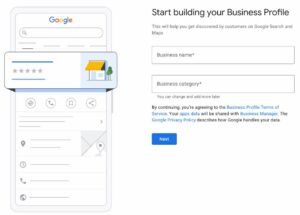
SEO for Medical Specialties

The fundamentals of medical SEO stay consistent across specialties, but the details shift. A dermatology practice benefits heavily from before-and-after content and procedure-specific pages; an orthopedic practice benefits from condition-specific pages built around common injuries and treatments; a solo practitioner has less content to manage but fewer resources to manage it with. The core building blocks — Google Business Profile, dedicated service pages, reviews, and technical health — apply across all of them, adjusted for the specific conditions, procedures, and patient questions that specialty actually sees.

SEO for Multi-Location Medical Groups

A multi-location medical group needs a dedicated page — and often a dedicated Google Business Profile — for each physical location, rather than one generic “Locations” page. Duplicating the same content across locations with only the city name changed tends to underperform, since it gives Google very little unique information to reward for any individual location.

Voice Search Optimization for Doctors

Voice search queries tend to be longer and more conversational than typed searches — “who’s the closest urgent care that’s open right now” rather than “urgent care near me.” Content written in a natural, question-and-answer format, along with accurate, up-to-date hours and location data on the Google Business Profile, gives voice assistants the specific information they need to surface a practice as a direct answer rather than a list of links.

Schema Markup for a Medical Practice Website

Structured data (schema markup) helps search engines understand exactly what a page represents — a physician, a medical procedure, a specific location — rather than inferring it from surrounding text. A basic physician entry might look like this:

Example: Simplified Physician Schema (JSON-LD)
Property Example Value
@type Physician
name Dr. Jane Smith, MD
medicalSpecialty Family Medicine
address Practice’s full postal address
telephone Practice’s phone number

Getting this right across every provider and location page is detailed, technical work — exactly the kind of thing a medical SEO company typically handles as part of an ongoing engagement rather than a one-time setup.

SEO vs. PPC for Patient Acquisition

SEO and pay-per-click (PPC) advertising solve different problems for patient acquisition. PPC can put a practice at the top of the results almost immediately, which is useful for a new practice building initial visibility or promoting a specific service — but that visibility disappears the moment the budget runs out, and healthcare PPC clicks tend to be expensive given how competitive medical keywords are. SEO takes longer to build but keeps generating appointment requests without an ongoing per-click cost once it’s established. Most practices get the best results running both: PPC for immediate visibility, SEO for durable, compounding growth.

DIY Medical SEO vs. Hiring a Specialized Agency

DIY Medical SEO vs. Hiring a Specialized Medical SEO Agency
Factor DIY Specialized Agency
Time investment Significant, ongoing, on top of running a practice Minimal — mostly approvals and check-ins
HIPAA/compliance awareness Practice owner must research independently Typically built into the agency’s process
Technical & schema work Steep learning curve Handled as part of the engagement
Multi-provider/location scale Difficult to maintain consistently Built for scale across providers and locations
Best fit for Very small practices with real time to invest Most practices, especially multi-provider or multi-location

DIY medical SEO is possible, especially for a small, single-provider practice with genuine time to dedicate weekly. It becomes harder to sustain as a practice adds providers, locations, or services — which is usually the point where a specialized medical SEO agency starts to pay for itself in time saved alone.

How Much Does SEO for Doctors Cost?

SEO pricing for medical practices varies based on how competitive the local market is, how many providers and locations are involved, and how much technical and content work the current site needs. Most medical SEO companies structure their services as an ongoing monthly retainer rather than a one-time project, since SEO is ongoing work rather than a single deliverable. 

Measuring ROI on SEO for a Medical Practice

Rankings alone don’t fill an appointment book. The metrics that actually matter: phone calls and appointment requests generated from organic search and the Google Business Profile combined, new-patient volume tied back to those leads, keyword rankings for the specific conditions and procedures a practice wants more of, and Google Business Profile views and actions over time. Call tracking and form-source tracking make it possible to say with confidence which new patients actually came from SEO versus other channels.

The Bottom Line

SEO for doctors isn’t a nice-to-have anymore — it’s one of the main ways patients decide who to call. If you’re ready to see what a dedicated approach looks like for your practice, visit our Healthcare SEO page.

4.6x

Businesses ranking on page one generate roughly 4.6x more leads than page two. Source

How long does SEO take to show results for a medical practice?

Most practices start seeing measurable movement in 3-6 months, with Google Business Profile improvements often showing impact faster than organic ranking changes for competitive terms.

Is SEO different for medical practices than for other local businesses?

The core mechanics are similar — Google Business Profile, reviews, local content — but medical practices carry extra weight around E-E-A-T (provider credentials and trust signals) and HIPAA considerations around testimonials and tracking technologies that most other local businesses don’t have to navigate.

What kind of content should a doctor’s website have?

At minimum: a dedicated page per condition or procedure treated, a page per provider with real credentials, location and contact information on every page, patient reviews, and content that answers the questions patients actually search before booking.

Can a small or solo medical practice compete with larger health systems on SEO?

Often, yes — particularly for local searches, where a well-optimized Google Business Profile and genuine local content can outperform a large health system’s generic, template-driven pages. Local intent tends to favor specificity and completeness over sheer size.

Not ranking where your customers are searching?

Talk to our SEO specialist team. No obligation, no pressure.

HC

Written by Heather Cumens at Lift SEO Services

Bowling Green, KY, serving healthcare and home service businesses across Kentucky and Nashville, TN.

Roofing SEO Company: What to Look for Before You Hire One

Roofing SEO Company What to Look for Before You Hire One Lift SEO Services Bowling Green KY Nashville TN

Roofing SEO Company: What to Look for Before You Hire One

Lift SEO Services · Updated July 2026 · 9 min read
Roofing SEO Company What to Look for Before You Hire One Lift SEO Services Bowling Green KY Nashville TN

The roofing industry isn’t short on demand — it’s a $92.5 billion market with more than 108,000 active roofing businesses all competing for the same homeowners, property managers, and storm-damage jobs. What’s changed is where those jobs get won: increasingly, it’s decided before the phone ever rings, by whichever roofing company shows up first when someone searches “roof repair near me.”

That’s why so many roofing companies eventually look at hiring a roofing SEO company. But not every roofing SEO agency delivers the same thing, and a bad hire can waste months of budget with nothing to show for it. Here’s what a good roofing SEO company actually does, and exactly what to look for — and look out for — before you sign a contract.


Table of Contents

What Is SEO for Roofing Companies?

SEO for roofing companies is the practice of optimizing a roofing business’s website and online presence so it shows up when homeowners and property managers search for roofing services in their area. That means dedicated pages for services like roof replacement, repair, and storm damage; a fully built-out Google Business Profile; consistent local citations; and a steady stream of reviews — all working together so a roofing company shows up in both the Google Map Pack and the standard organic search results for the searches that actually lead to booked jobs.

Roofing SEO isn’t fundamentally different from SEO in other industries, but it leans heavily local: most roofing searches carry a location and urgency (a leaking roof doesn’t wait), which is why local SEO and Google Business Profile management tend to matter more for roofing companies than broad, national content strategies.

Why Roofing Companies Need SEO (Not Just Ads)

Roofing leads are getting more expensive to buy and harder to win organically at the same time. Paid search clicks for high-intent roofing terms routinely run well into double digits per click — and that’s per click, not per lead. Meanwhile, the Google Map Pack (the three-listing box that appears above organic results for local searches) captures a huge share of clicks on searches like “roof repair near me” or “emergency roofer,” which means a roofing company with weak SEO is losing leads to competitors it never even sees.

SEO doesn’t replace paid ads, but it’s the only channel that keeps producing leads without a per-click bill attached once it’s built — which is exactly why roofing SEO services have become one of the most requested services from roofing marketing companies.

What a Good Roofing SEO Company Actually Does

If you’re evaluating a roofing SEO agency, this is the actual scope of work that should be on the table — not just “we’ll get you to page one.”

Local SEO & Google Business Profile Management

Category selection, service listings, project photos, review responses, and posting cadence on your Google Business Profile — this is often the single highest-leverage piece of roofing SEO, since the Map Pack is where most local roofing searches get decided.

Service & Location Pages

A single generic “Roofing Services” page can’t rank for everything. A strong roofing SEO company builds dedicated pages for your highest-value services — emergency roof repair, storm and hail damage, commercial flat roofing, metal roofing, insurance-claim support — and for each city or area you actually serve.

Review Generation & Reputation Management

Roofing is a high-trust, high-dollar purchase. A steady stream of recent, detailed reviews (not just a high star rating from three years ago) is one of the strongest trust signals a roofing company can build, both for Google’s algorithm and for the homeowner deciding whether to call.

Technical SEO & Site Speed

Since the majority of roofing searches happen on mobile — often from someone standing in their driveway looking at storm damage — a slow-loading site or a buried phone number is a direct lead leak. Technical SEO cleans up the plumbing (so to speak) that lets the rest of the strategy work.

Blog content that answers real homeowner questions (how much does a roof replacement cost, what does hail damage look like, how insurance claims work) builds topical authority and gives you something worth linking to — which matters, since local backlinks remain one of the harder-to-fake trust signals in roofing SEO.

Effective link building for a roofing website usually focuses on local, relevant sources rather than volume: local news coverage of storm damage or community involvement, chamber of commerce and trade association memberships, sponsorships of local sports teams or events, partnerships with complementary local businesses (real estate agents, insurance adjusters, home inspectors), and supplier or manufacturer directories that list certified installers. A handful of genuine local links usually does more for a roofing company’s rankings than a large batch of generic, purchased links from unrelated sites.

108,000+ active roofing businesses competing in the US, in a $92.5B market Source: IBISWorld
78% of local mobile searches lead to an offline purchase or contact within 24 hours Source: Invoca
97% of consumers read reviews before choosing a local business Source: BrightLocal, 2026
Put together, those numbers describe a roofing search landscape where the decision happens fast, on a phone, and largely based on trust signals a roofing SEO company is directly responsible for building.

In-House SEO vs. Hiring a Roofing SEO Agency

Some roofing companies try to build an in-house marketing hire into their team rather than outsourcing to a roofing SEO agency. Both can work, but they trade off differently:

In-House SEO vs. Roofing SEO Agency
Factor In-House Hire Roofing SEO Agency
Cost structure Salary, benefits, tools — fixed overhead Monthly retainer or project fee
Skill coverage Limited to one person’s expertise Team spanning content, technical SEO, local SEO
Roofing-specific experience Depends entirely on who you hire Often built from work across multiple roofing clients
Ramp-up time Hiring, onboarding, and learning your market Existing playbook, faster to start
Best fit for Larger companies with steady marketing budget Most small-to-midsize roofing companies

For most small and midsize roofing companies, a roofing SEO agency ends up being the more practical choice simply because it’s difficult for one in-house hire to cover content, technical SEO, local SEO, and reporting all at once — an agency’s team already has that specialization built in.

7 Questions to Ask Before You Hire a Roofing SEO Company

  1. Have you worked with roofing companies specifically? Roofing has unique seasonal, storm-driven, and insurance-related search patterns that a generalist agency may not know to build for.
  2. What does your reporting actually show? Rankings alone don’t pay the bills — ask to see how they report calls, form fills, and booked inspections, not just keyword positions.
  3. Will you build dedicated pages for my highest-value services? Storm damage, commercial roofing, and metal roofing are usually worth more per job than a generic “roofing” page can capture.
  4. How do you handle Google Business Profile management? This should be an active, ongoing part of the engagement — not a one-time setup.
  5. What’s your review generation process? Ask specifically how they help you collect recent reviews on an ongoing basis, not just a one-time push.
  6. Can I see real, verifiable results from past roofing clients? Ask for specifics — ranking movement, traffic, and lead volume — not just logos.
  7. What happens if I want to leave? Make sure you own your website, content, and Google Business Profile access regardless of what happens with the contract.

Red Flags to Watch For

Good Sign vs. Red Flag When Evaluating a Roofing SEO Company
Area Good Sign Red Flag
Guarantees Realistic timelines based on your market and competition “Guaranteed #1 ranking” promises
Reporting Calls, leads, and booked jobs tracked alongside rankings Keyword rankings only, with no lead data
Content Custom pages written for your services and service area Templated content reused across every roofing client
Links Local, relevant, earned links from real sites Bulk or paid link packages from unrelated sites
Contract Month-to-month or clear opt-out terms Long-term lock-in with steep cancellation penalties
Ownership You own your site, content, and GBP access Agency retains control of your website or listings

Local SEO Strategies for Roofing Companies

Local SEO strategies for roofing companies build on the same foundation as local SEO for any home service business, applied to roofing’s specific search patterns: a fully optimized Google Business Profile with roofing-specific categories and services listed, dedicated pages for each city or county served rather than one generic service area page, consistent citations across roofing-specific directories in addition to general business directories, and a review-generation process timed to follow immediately after project completion, when customers are most likely to leave detailed, positive feedback. Roofing companies that serve a wide geographic area often benefit most from location pages built around specific towns rather than trying to rank one page for an entire region.

SEO for Storm Damage and Insurance-Claim Roofing Work

Storm damage and insurance-claim roofing work has its own search pattern: spikes in search volume immediately after a storm event, and searchers who need both a contractor and clear guidance on how the insurance claim process works. A dedicated storm damage page — covering what hail and wind damage actually look like, how to document damage for a claim, and how the company works directly with insurance adjusters — tends to perform well precisely because it answers questions a homeowner has before they’re ready to call anyone. Roofing companies that build this content ahead of storm season, rather than scrambling afterward, are better positioned to capture that spike in demand.

SEO for Commercial Roofing Contractors

Commercial roofing SEO looks somewhat different from residential roofing SEO. The buyers are property managers, facilities directors, and business owners rather than homeowners, the sales cycle is typically longer, and the content needs to speak to commercial roofing systems (flat roofing, TPO, EPDM, metal) and considerations like minimizing business disruption during a re-roof. A commercial roofing contractor’s website should have its own dedicated commercial services section rather than folding it into residential service pages, since the search intent and the audience are both meaningfully different.

How to Get More Roofing Leads From Your Website

Ranking well is only half the equation — the website itself needs to convert that visibility into booked inspections. That means a visible phone number and a simple contact or estimate-request form on every page, dedicated pages for high-value services (storm damage, commercial roofing, specific roofing systems) rather than one catch-all services page, real project photos and reviews built into the pages themselves rather than buried on a separate testimonials page, and fast mobile load times, since a large share of roofing searches happen on a phone, often right after storm damage.

PPC vs. SEO for Roofers: Which Is Better?

Pay-per-click (PPC) advertising and SEO solve different problems for a roofing company. PPC can put a roofing business at the top of search results almost immediately, which is useful for capturing a sudden spike in storm-related searches, but that visibility disappears the moment the ad budget runs out, and roofing PPC clicks tend to be expensive given how competitive and high-value the searches are. SEO takes longer to build but keeps generating leads without an ongoing per-click cost once it’s established. Most roofing companies get the best results running both together: PPC for immediate, storm-driven demand, and SEO for steady, compounding visibility the rest of the year.

SEO Tools and Software for Roofing Contractors

A roofing company doesn’t need an extensive toolkit to manage SEO well. The categories worth knowing about: rank tracking tools to monitor how core service and location pages perform over time, citation management platforms that push consistent business information to multiple directories at once, review management tools that centralize review requests and responses, and basic web design and site-speed tools to catch technical issues before they cost leads. The Google Business Profile dashboard itself is also a free, direct source of local search performance data that shouldn’t be overlooked.

Common Roofing SEO Mistakes to Avoid

A few mistakes show up repeatedly in roofing SEO: relying on one generic services page instead of dedicated pages per service and location, letting Google Business Profile go unmanaged between storms, chasing bulk or purchased backlinks instead of genuine local links, and treating reviews as a one-time push rather than an ongoing process. It’s also worth keeping an eye on generative engine optimization (GEO) — as AI-driven search features increasingly generate direct answers instead of just a list of links, many of the same fundamentals that help traditional roofing SEO (clear service pages, strong reviews, structured, well-organized content) also help a roofing company show up in those AI-generated answers, not just standard search results.

KPIs to Track for Roofing SEO

Rankings alone don’t tell the full story. The KPIs that matter most for a roofing company: phone calls and form submissions generated from organic search and Google Business Profile combined, booked inspections tied back to those leads (not just raw lead volume), keyword rankings for core service and location pages, Google Business Profile views and actions, and overall organic traffic and visibility trends, especially around storm events when demand spikes.

SEO Marketing Plan for a Small, Local Roofing Company

A small, local roofing company doesn’t need an enterprise-scale marketing plan to get real results. A reasonable starting plan: claim and fully complete your Google Business Profile, build out dedicated pages for your two or three highest-value services, set up a simple post-job review-request process, clean up your NAP consistency across the citation sites that matter most in your area, and add a handful of genuine local links over the following several months. Layering in paid ads or a broader content strategy can come later, once that foundation is in place.

DIY SEO for a New Roofing Business on a Budget

A new roofing business on a tight budget can realistically handle the fundamentals of SEO without hiring anyone right away: claim and completely fill out your Google Business Profile, build simple but genuine pages for each core service you offer, get your business listed accurately on the citation sites that matter most, and ask every satisfied customer for a review. None of that requires paid tools or outside help — it requires consistency, which is usually the harder part once the business itself gets busy.

Roofing SEO Company vs. Agency vs. Freelancer

These terms get used interchangeably, but the practical difference usually comes down to scope and accountability. A roofing SEO agency typically offers a fuller stack — SEO, content, sometimes paid ads and web design — with a team behind the account. Seo services for roofing companies offered by a freelancer can be more affordable, but you’re relying on one person’s bandwidth and expertise across every discipline. Neither is automatically the “right” answer — it depends on how much you need done and how hands-on you want to be in managing it.

What Roofing SEO Should Cost

Roofing SEO pricing varies widely based on your market’s competitiveness, how many locations you serve, and how much content and technical work your current site needs. Most roofing SEO companies structure their SEO packages as an ongoing monthly retainer rather than a single flat fee, since SEO is ongoing work rather than a one-time project — though some agencies offer tiered packages based on how many services and locations are covered. 

The Bottom Line

A roofing SEO company should be able to show you exactly how their work turns into calls and booked inspections — not just a ranking report. If you’re ready to see what that looks like for your business, check out our Home Services SEO page.

Not ranking where your customers are searching?

Talk to our SEO specialist team. No obligation, no pressure.

How long does roofing SEO take to show results?

Most roofing companies start seeing measurable movement in 3-6 months, with Google Business Profile improvements often showing impact faster than organic ranking changes.

Is SEO worth it for a small, local roofing company?

Often more so than for large regional players — smaller roofing companies typically face less competition for their specific service area and service types, which can mean faster, more affordable wins.

Should I do roofing SEO myself or hire a roofing SEO company?

If you have the time to consistently manage your Google Business Profile, publish content, and build local links, DIY is possible. Most roofing business owners find that the time cost outweighs the savings once storm season hits and the business itself demands full attention.

How much should I budget for roofing SEO?

It depends on your market’s competitiveness, how many services and locations need pages, and how much technical work your site needs. Rather than assume a flat industry rate, get a specific quote based on your actual market and current site.

What questions should I ask a potential roofing SEO provider?

Ask whether they’ve worked with roofing companies specifically, how they report results (calls and booked inspections, not just rankings), whether each service and location gets its own dedicated page, and what happens to your website and Google Business Profile access if you decide to leave.

Not ranking where your customers are searching?

Talk to our SEO specialist team. No obligation, no pressure.

HC

Written by Heather Cumens at Lift SEO Services

Bowling Green, KY, serving healthcare and home service businesses across Kentucky and Nashville, TN.

What Is a Local SEO, and Why It Matters for Healthcare and Home Service Businesses

What Is a Local SEO, and Why It Matters for Healthcare and Home Service Businesses Lift SEO Services Bowling Green KY Nashville TN
,

What Is a Local SEO, and Why It Matters for Healthcare and Home Service Businesses

Lift SEO Services · Updated July 2026 · 9 min read
What Is a Local SEO, and Why It Matters for Healthcare and Home Service Businesses Lift SEO Services Bowling Green KY Nashville TN

If you run a dental practice, an HVAC company, a plumbing business, or a medical clinic, you’ve probably heard the term “local SEO” thrown around by every marketing vendor who’s ever called your front desk. But what is local SEO, actually — and why does it get talked about differently than regular SEO?

Here’s the short version: local SEO is the set of strategies that help your business show up when someone nearby searches for what you do. For a healthcare practice or a home service business, that’s not a nice-to-have. It’s usually the single biggest driver of new patients or new jobs booked, because almost nobody searches “best dentist” — they search “dentist near me” or “dentist in [their city].”

This guide breaks down what local SEO actually is, how it’s different from general SEO, and where to start if you’re new to it.


Table of Contents

What Is Local SEO? 

Local SEO is the practice of optimizing your online presence so your business shows up in search results for people looking for your services in your specific area. That includes your Google Business Profile, your website’s service and location pages, your reviews, and the citations and backlinks that tell Google your business is a real, trustworthy, local operation.

When someone searches “emergency plumber Bowling Green KY” or “medical spa near me,” Google isn’t just trying to find a relevant business — it’s trying to find the closest, most trustworthy, most relevant business to that specific searcher. That’s the whole game of local SEO: proving to Google (and to the person searching) that you’re that business.

Local Search Engine Optimization in Simple Terms

In plain language: local SEO is search engine optimization aimed at your neighborhood instead of the whole country. Regular SEO asks “how do we rank for this topic anywhere?” Local SEO asks “how do we rank for this topic in the specific towns and neighborhoods we actually serve?” It’s a strategy that helps Google understand where a local business’s visibility should show up, using signals like your Google Business Profile, local citations, reviews, and location-specific content to connect your business’s visibility with the customers already searching nearby.

How Local SEO Is Different From Traditional SEO

General SEO and local SEO share a lot of DNA — both care about content quality, site structure, and backlinks. But they optimize for different outcomes, and mixing up the two is one of the most common mistakes healthcare and home service businesses make when they try to handle this in-house.

Local SEO vs. Traditional (National) SEO
Factor Local SEO Traditional / National SEO
Primary goal Rank in a specific city, region, or service area Rank nationally or globally for a topic
Where you show up Google Map Pack, local organic results, Google Maps Standard organic search results
Key ranking signals Google Business Profile, reviews, local citations, proximity to searcher Backlink authority, content depth, topical relevance
Content strategy City/service-area pages, local case studies, local backlinks Broad topic guides, national comparison content
Best fit for Practices and contractors with a physical service area E-commerce, SaaS, national brands, publishers

For a healthcare practice or a home service business, almost every dollar of SEO effort should be filtered through the local lens first. A beautifully written blog post that never mentions your service area is doing half the job.

Why Local SEO Matters More for Healthcare and Home Service Businesses

Not every industry needs local SEO equally. E-commerce brands and software companies often compete nationally. But healthcare and home services are about as “local” as a business can get, for a few specific reasons:

  • The searches are urgent. “Emergency AC repair” and “urgent care near me” are searches from people who need help today, not next month — and Google’s local results are built to answer exactly that kind of query.
  • “Near me” is the default. Very few people search “best HVAC company” without a location qualifier attached, whether they type it or Google infers it from their device.
  • Trust has to be established fast. Letting a stranger into your home or trusting a provider with your health are high-stakes decisions — reviews, ratings, and a complete online presence do a lot of that trust-building before the phone ever rings.
  • You can’t serve everyone, so you shouldn’t try to rank everywhere. Local SEO focuses your visibility on the exact radius you can actually service, instead of competing for impossible national rankings.

The Building Blocks of Local SEO

Local SEO isn’t one tactic — it’s several working together. Here’s what actually makes up a local SEO strategy.

Google Business Profile

Your Google Business Profile (formerly Google My Business) is the listing that shows up in the Map Pack and on Google Maps. It’s arguably the single most important local SEO asset you have, since it’s the first thing most searchers see and interact with — your hours, photos, services, and review score all live there.

What Is the Google Local Pack?

The “local pack” (sometimes called the “map pack”) is the block of three local business listings, complete with a map, that Google shows above the standard organic search results for searches with local intent. Getting into that local pack is one of the highest-value outcomes in local SEO, since it sits above nearly everything else on the page and pulls a disproportionate share of clicks. Ranking in the local pack depends on the same relevance, distance, and prominence signals that drive local rankings generally — a complete Google Business Profile, consistent citations, and strong reviews all play a role.

Local Citations & NAP Consistency

A “citation” is any online mention of your business Name, Address, and Phone number (NAP) — think Yelp, industry directories, the local Chamber of Commerce site, and dozens of others. Consistent, accurate citations across the web are one of the clearest trust signals Google uses to confirm you’re a legitimate local business.

Local SEO backlinks and local SEO link building work differently than general link building. Instead of chasing high-authority national publications, local link building prioritizes links from other businesses, organizations, and publications in your actual service area — local news coverage, sponsorships, chamber memberships, and partnerships with complementary local businesses.

On-Page Local Content

This is where dedicated service pages and location pages come in. A generic “Services” page tells Google almost nothing about where you operate. A page built around “AC Repair in Bowling Green, KY” tells Google exactly what you do and exactly where you do it — which is what lets you rank for the searches that actually convert.

Reviews & Reputation

Review volume, review recency, and your average star rating all factor into local rankings — and they factor even more heavily into whether a searcher actually calls you once they find you. A five-star Google Business Profile with 200 recent reviews beats a beautiful website with none, every time.

How Google Decides Which Local Businesses to Show in Search Results

Google has said publicly that local rankings come down to three main factors: relevance (how well your business matches what someone’s searching for), distance (how close you are to the searcher or the area they specified), and prominence (how well-known and well-reviewed your business is, both online and off). Local SEO is, in essence, the practice of improving all three.

Here’s why that’s worth taking seriously:

 
46% of all Google searches carry local intent — meaning the searcher wants a result near them Source: BrightLocal, via Search Engine Roundtable
42% of local searchers click a result in the Google Map Pack — often before scrolling to organic results Source: Backlinko, 2024
70% more likely to be visited when a business has a complete Google Business Profile Source: Google

Local SEO Ranking Factors at a Glance

Relevance, distance, and prominence are the three factors Google names publicly, but in practice, local SEO ranking factors break down into a handful of concrete signals worth tracking:

  • Google Business Profile completeness — categories, services, hours, photos, and posting activity
  • Review signals — volume, recency, average rating, and how a business responds to reviews
  • Citation consistency — accurate, matching business listings across the web
  • On-page local content — dedicated service and location pages that clearly state what you do and where
  • Local links — backlinks from other businesses, organizations, and publications in your actual service area
  • Proximity — how close your business is to the person searching, which you can’t control directly but can optimize around with location-specific pages

How to Find Local Keywords

A local keyword pairs what you do with where you do it — “emergency plumber Bowling Green KY” rather than just “emergency plumber.” To find local keywords worth targeting, start with your core services and combine each one with your city, neighborhood names, and nearby towns you actually serve. Google’s autocomplete and “related searches” both surface real local keyword variations, and a free keyword research tool can help confirm which versions get meaningful search volume before you build a page around one.

Don’t stop at your city name alone — searchers also use landmarks, ZIP codes, and neighborhood names, and building content around those local keywords can capture searches a competitor targeting only the city name entirely misses.

How to Perform a Local SEO Audit

Before investing further in local SEO, it’s worth auditing where you actually stand. A basic local SEO audit walks through five areas: confirm your Google Business Profile is fully complete and accurate, check NAP consistency across your top citation sources, review your website for dedicated service and location pages (versus one generic page trying to cover everything), assess your review volume and recency compared to local competitors, and check whether your core pages actually rank for the local keywords you care about. Several free and paid tools can automate parts of this process, but even a manual pass through these five areas will surface most of the obvious gaps.

Local SEO Checklist for a New Website

Launching a new site is the easiest time to build local SEO in from the start, rather than retrofitting it later:

  1. Claim and fully complete your Google Business Profile before or immediately after launch
  2. Build a dedicated page for each core service, written for your actual service area
  3. Add location-specific content rather than generic, one-size-fits-all copy
  4. Set up citation listings on the major directories relevant to your industry
  5. Add schema markup so Google can clearly identify your business type, location, and services
  6. Put a review-request process in place from day one

Not ranking where your customers are searching?

Talk to our SEO specialist team. No obligation, no pressure.

Local SEO Tools Worth Knowing About

You don’t need a large toolkit to manage local SEO well, but a few categories of tools make the work easier: citation and listing management platforms that help you push consistent NAP data to multiple directories at once, review management tools that centralize review requests and responses across platforms, and rank tracking tools that show how your local keywords are performing over time in your specific service area. Your Google Business Profile dashboard itself is also a free, direct source of local search performance data and shouldn’t be overlooked in favor of paid tools.

Local SEO for Multi-Location Businesses

Local SEO gets more complex once a business operates in more than one city or region. Instead of one generic “Locations” page, each location typically needs its own dedicated page with unique content, its own Google Business Profile, and its own set of local citations and reviews — duplicating the same page across locations with only the city name swapped tends to underperform, since it gives Google very little unique local content to reward. Multi-location businesses also need a clear internal linking structure so customers (and Google) can easily find the right location page for their area.

What Does a Local SEO Company Do to Help with Visilbility?

A local SEO company manages the ongoing work behind everything covered in this guide: Google Business Profile optimization, citation building and cleanup, review generation strategy, dedicated service and location page content, and local link building — plus reporting that ties all of it back to calls, form submissions, and booked business rather than rankings alone. If you’d rather see what that looks like for your specific business.

Local SEO in Action: A Quick Example

Say a homeowner’s water heater starts leaking on a Saturday morning. They pull out their phone and search “water heater repair near me.” Google shows a Map Pack of three plumbing companies, ranked by relevance, distance, and prominence — not necessarily the plumber with the fanciest website, but the one with a complete Google Business Profile, recent reviews, and a dedicated water heater repair page that clearly serves their neighborhood.

That’s the entire local SEO game in one search: be the business Google trusts enough to put in that box, and be the business the homeowner trusts enough to call once they see it.

Where to Start If You’re New to Local SEO

If you’re just getting started, don’t try to do everything at once. Work through these in order:

  1. Claim and fully complete your Google Business Profile — every field, every category, real photos, accurate hours.
  2. Audit your NAP consistency across your website, social profiles, and any directories you’re already listed on.
  3. Build (or fix) dedicated service pages for each core service, written for your actual service area rather than generic copy.
  4. Set up a simple review-request process so happy customers or patients are consistently asked to leave a review.
  5. Start earning a handful of genuine local links — local sponsorships, partnerships, and press mentions go a long way.

The Bottom Line

Local SEO isn’t a separate discipline from “regular” marketing — for a healthcare practice or a home service business, it’s most of the job. If you offer healthcare services, start with our Healthcare SEO page to see how this applies to practices specifically. If you’re in HVAC, plumbing, electrical, or another home service trade, our Home Services SEO page walks through the same strategy built for your industry.

Is local SEO different for healthcare practices than for home service businesses?

The core mechanics are the same — Google Business Profile, reviews, citations, local content — but healthcare adds an extra layer of trust and compliance considerations (like accurate provider information and patient privacy in reviews) that home service businesses don’t have to navigate.

How long does local SEO take to show results?

Most businesses start seeing meaningful movement in local rankings within 3-6 months, though Google Business Profile improvements can show impact much faster since that listing updates in near real-time.

Do I need a website if I already have a strong Google Business Profile?

Yes. Your Google Business Profile is often the first touchpoint, but your website is what Google uses to verify relevance and what convinces a searcher to actually book or call — the two work together, not as substitutes for each other.

What is local SEO in simple terms?

It’s search engine optimization focused on your specific service area rather than the whole country — helping your business show up when nearby customers search for what you do, instead of competing for national rankings you don’t need.

How do local citations help SEO?

Consistent citations across directories confirm to Google that your business name, address, and phone number are accurate and that you’re a real, established local operation — inconsistent or outdated citations can quietly hold back local rankings even when everything else is in good shape.

Is local SEO worth it for a B2B company?

It depends on how the company generates business. A B2B company that serves clients within a specific region or metro area still benefits from local SEO fundamentals like Google Business Profile and location-specific content, but a B2B company selling nationally or internationally with no physical service area will get more value from traditional SEO instead.

Not ranking where your customers are searching?

Talk to our SEO specialist team. No obligation, no pressure.

HC

Written by Heather Cumens at Lift SEO Services

Bowling Green, KY, serving healthcare and home service businesses across Kentucky and Nashville, TN.

Plumber SEO Company vs. DIY: Is It Worth Hiring an Expert?

Plumber SEO Company vs. DIY Is It Worth Hiring a SEO Expert Lift SEO Services Bowling Green KY Nashville TN
,

Plumber SEO Company vs. DIY: Is It Worth Hiring an Expert?

Lift SEO Services · Updated July 2026 · 9 min read
Plumber SEO Company vs. DIY Is It Worth Hiring a SEO Expert Lift SEO Services Bowling Green KY Nashville TN

Every plumbing business owner hits the same fork in the road eventually: keep trying to handle SEO yourself between jobs, or bring in a plumber SEO company to take it over. Neither answer is automatically right — it depends on how much time you actually have, how competitive your market is, and how fast you need results.

This is a straight, side-by-side look at what DIY plumber SEO really involves versus what a plumber SEO company does differently, so you can make the call with real information instead of a sales pitch.


Table of Contents

What Is Local SEO for Plumbers?

Local SEO is the set of practices that help a plumbing business show up when someone nearby searches for a plumber — think “emergency plumber near me” or “water heater repair [city].” For plumbers, local SEO leans heavily on three things: a fully optimized Google Business Profile, consistent business information across the web (name, address, phone number), and location-specific service content on the website itself. It’s different from general SEO because the goal isn’t just ranking for a keyword — it’s ranking for that keyword in your specific service area, which is what actually drives calls instead of just traffic.

A plumber SEO company builds its entire approach around this distinction. Every tactic — from Google Business Profile management to citation building to service-area page content — is aimed at improving local visibility in the specific towns and neighborhoods a plumbing business actually serves, not at generic national rankings that don’t convert into real jobs.

What DIY Plumber SEO Actually Involves

Doing plumber SEO yourself is entirely possible — plenty of small plumbing businesses have built solid local visibility without ever hiring an agency. But it’s not a weekend project. A real DIY effort involves:

  • Fully building out and actively managing your Google Business Profile
  • Writing and publishing dedicated pages for each service (drain cleaning, water heater repair, sewer line work, emergency plumbing)
  • Keeping your business name, address, and phone number consistent across every directory and citation site
  • Requesting and responding to reviews on an ongoing basis
  • Monitoring technical site health — page speed, mobile usability, broken links
  • Learning enough basic SEO to know what’s actually working versus what’s just busywork

None of that is impossible for a business owner to learn. The real constraint is almost always time — and for a plumbing business, time usually means billable jobs, not blog posts.

What a Plumber SEO Company Does Differently

A plumber SEO company or plumber SEO agency isn’t doing anything mystical — they’re doing the same list above, but with a few structural advantages a solo owner usually can’t match: dedicated time every week, tools for tracking rankings and competitors, experience across dozens of plumbing clients showing what actually moves the needle, and a team split across content, technical SEO, and local optimization instead of one person doing all of it after hours.

That combination is usually what separates plumber seo services that produce steady lead flow from a DIY effort that stalls out after the first few months.

DIY vs. Hiring a Plumber SEO Company: Side-by-Side

DIY Plumber SEO vs. Hiring a Plumber SEO Company
Factor DIY Plumber SEO Company
Time investment 5-10+ hours/week, ongoing Minimal — mostly approvals and check-ins
Technical skill required Must learn SEO fundamentals + basic web skills Provided by the agency’s team
Typical timeline to see traction 6-12+ months, often slower without experience 3-6 months for most competitive markets
Common mistakes Inconsistent publishing, thin location pages, ignoring technical issues Fewer, but still possible with a low-quality agency
Cost Your time (unpaid) + any tools you buy Monthly retainer or project fee

For plumbing businesses researching this decision online, the stakes are real — and growing, since more of your future customers are starting their search for a plumber the same way you’re researching this article.

Not ranking where your customers are searching?

Talk to our SEO specialist team. No obligation, no pressure.

That last stat is worth sitting with. Jobber’s own platform data found that alongside missing FAQ sections, 65% of home service business websites don’t display business hours, and 43% don’t clearly list their service areas. Those are exactly the kind of gaps a DIY effort tends to leave — not because they’re hard to fix, but because they’re easy to forget when you’re also running the business.

SEO Strategies for a Small, Local Plumbing Business

Not every plumbing company needs the same SEO strategy. A one-truck operation in a small town has different priorities than a multi-crew plumbing and HVAC business covering a metro area. That said, four areas matter for almost any small, local plumbing business getting started with SEO — whether you handle them yourself or bring in a plumber SEO agency to manage them.

Google Business Profile Optimization for Plumbers

Your Google Business Profile is usually the first thing a prospective customer sees, often before they ever reach your website. A complete profile — accurate service categories, service area, business hours, photos of completed jobs, and a steady stream of posts and updates — has a direct effect on whether you show up in the local map results for searches like “plumber near me.” Profile management is one of the highest-leverage, lowest-cost pieces of plumbing SEO available, and it’s one most small businesses under-invest in simply because it’s easy to set up once and forget about.

Local Citations and NAP Consistency

A citation is any online listing of your business name, address, and phone number (NAP) — think Yelp, Angi, the Better Business Bureau, or local chamber-of-commerce directories. When that information doesn’t match exactly across every listing, it creates confusion for both customers and Google’s local ranking systems. Cleaning up and standardizing citations is unglamorous work, but it’s a foundational piece of local visibility for any plumbing business competing in a crowded market.

Getting More 5-Star Reviews for Your Plumbing Company

Reviews influence both rankings and conversions — a plumbing company with a steady flow of recent, positive reviews tends to outperform a competitor with a handful of old ones, even if the older company has been in business longer. A simple system (a text or email sent right after a completed job, with a direct link to leave a review) usually outperforms sporadic, one-off requests. The goal isn’t just star rating; recent review volume and how a business responds to reviews both factor into local search visibility.

Technical SEO Basics for Plumbing Websites

Technical SEO covers the behind-the-scenes health of a website: page load speed, mobile usability, secure (HTTPS) connections, and making sure Google can actually crawl and index every service and location page. A plumbing website can have great content and still underperform if it loads slowly on mobile or has broken internal links — technical issues quietly cap how well everything else works.

Checklist: Optimizing a Plumber’s Website for Search

Whether you’re doing this yourself or evaluating a plumber SEO company’s work, this is a reasonable starting checklist for getting a plumbing website in shape:

  1. Claim and fully complete your Google Business Profile, including service areas and categories
  2. Build a dedicated page for each core service (drain cleaning, water heater repair, pipe repair, sewer line work, emergency plumbing)
  3. Audit your NAP consistency across major citation sites
  4. Check mobile page speed and fix any major technical issues
  5. Add a review-request process to your post-job workflow
  6. Make sure phone number and service area are visible without scrolling on mobile
  7. Add an FAQ section addressing the questions customers actually ask

What Content Should a Plumber’s Website Have?

Beyond the homepage, a plumbing website’s content should include individual pages for each major service, a dedicated page per city or service area if you cover more than one town, an about/team page that builds trust, a reviews or testimonials section, and clear contact information with a visible phone number on every page. Plumbing and HVAC businesses that only have a single generic “Services” page tend to struggle to rank for specific searches like “water heater repair” or “sewer line replacement,” because there’s no dedicated page for Google to match the query to.

How to Get More Plumbing Leads From Google

Most of the strategies above roll up into one practical goal: more qualified leads from Google without paying for every single click. In practice, that means ranking organically in both the local map results and the standard search results for the services you actually want more of, keeping your Google Business Profile active, and making sure every page on your site is built to convert a visitor into a phone call or form submission — not just to attract traffic. A plumber SEO company typically treats lead volume and lead quality as the real success metric, not rankings alone.

Plumber SEO vs. PPC (Google Ads): Which Is Better for Emergency Calls?

SEO and pay-per-click (PPC) advertising solve different problems. PPC campaigns can put a plumbing business at the top of the search results almost immediately, which makes them useful for urgent, high-intent searches like “emergency plumber tonight” — but that visibility disappears the moment the campaign budget runs out. SEO takes longer to build but keeps working without an ongoing per-click cost, and it tends to produce better long-term return once it’s established. Many plumbing companies end up running both: PPC for immediate emergency-call volume, and SEO for sustainable, compounding visibility.

Google Local Service Ads vs. SEO for Plumbers

Google Local Service Ads (LSAs) are a separate ad product from standard PPC — they appear above regular search results, charge per lead rather than per click, and require a Google Guarantee background check. LSAs and SEO aren’t competitors; they work well together, since LSAs can generate leads while your organic and local SEO presence builds in the background.

How Much Does a Plumber SEO Company Cost?

Plumber SEO pricing varies widely based on how competitive your market is, how many services and locations you need pages for, and how much technical work your current site needs. Most plumber SEO companies price their services as an ongoing monthly retainer rather than a single flat fee, since SEO is an ongoing process rather than a one-time project. Rather than comparing agencies purely on price, it’s worth asking what’s actually included — content creation, technical fixes, citation management, and reporting can all be bundled very differently between providers, and two proposals with similar monthly numbers can represent very different scopes of work.

KPIs to Track for Plumbing SEO

Rankings alone don’t pay the bills — the KPIs that matter most for a plumbing business are the ones tied to actual business results. Worth tracking on a regular basis: phone calls generated from Google (organic and Google Business Profile combined), form submissions and their source, keyword rankings for your core service and location pages, Google Business Profile views and actions (calls, direction requests, website clicks), and overall organic search traffic and visibility trends over time.

How to Track ROI From a Plumber SEO Campaign

At a basic level, ROI from a plumber SEO campaign comes down to: how many leads did SEO generate, what percentage turned into booked jobs, and what was the average ticket value of those jobs — compared against the monthly cost of the SEO work itself. Call tracking numbers and form-source tracking make this calculation possible; without them, it’s difficult to say with confidence which leads actually came from search versus other marketing channels.

When DIY Makes Sense

  • You’re in a low-competition market with few other plumbing businesses actively investing in SEO
  • You genuinely have consistent time to dedicate weekly, not just when things are slow
  • You’re comfortable learning technical basics like page speed and mobile usability
  • You’re not in a rush — you can afford a slower ramp-up to results

When It’s Worth Hiring a Plumber SEO Company

  • Your market has several established plumbing competitors already ranking well
  • You’d rather spend your time on jobs and staff than on content calendars and citation audits
  • You’ve tried DIY and plateaued, or never got off the ground
  • You need results on a specific timeline — a slow ramp-up isn’t good enough

What to Look for in a Plumber SEO Company

If you decide hiring makes sense, look for a plumber SEO agency that can show real experience with plumbing or home service clients specifically, reports on calls and leads (not just keyword rankings), builds dedicated pages for your core services instead of one generic page, and is transparent about timeline and pricing from the start. See our Pricing & Packages page for how we structure plumbing and home service SEO engagements.

Questions to Ask a Potential SEO Provider

A short list of questions tends to separate a strong plumber SEO company from a weak one fast:

  1. Can you show results from other plumbing or home service clients?
  2. How do you report results — calls and leads, or just rankings?
  3. Will each of my services and locations get its own dedicated page?
  4. What does a typical timeline to see traction actually look like?
  5. Is pricing a flat monthly retainer, or does it change based on scope?
  6. Who actually does the work — your team, or a subcontractor?

The Bottom Line

DIY plumber SEO is a real option, not just a myth agencies use to scare owners into hiring them — but it costs real time, and time is the one resource most plumbing business owners don’t have to spare. If you’d rather see what a dedicated plumber SEO company can do for your business, visit our Home Services SEO page to see how we approach it.

4.6x

Businesses ranking on page one generate roughly 4.6x more leads than page two. Source

Frequently Asked Questions

Can a small plumbing business really do SEO without an agency?

Yes, especially in lower-competition markets — but it takes consistent weekly effort over months, not a one-time setup. Optimal SEO work also requires a knowledge of SEO techniques for on page, off page, and GBP optimization. There are several old strategies and techniques for SEO that can hurt modern-day businesses and result in Google penalties. There are several old SEO strategies that still work insanely well. If you know the difference, then in-house SEO work will pay off.

What’s the biggest mistake plumbing businesses make with DIY SEO?

Inconsistency — publishing a few pages or getting a handful of reviews, then losing momentum. Local SEO rewards steady, ongoing effort far more than a single big push.

How much does a plumber SEO company typically cost?

Pricing varies based on your market’s competitiveness and how much work your current site needs. It’s worth getting a specific quote rather than assuming a flat industry rate applies to your situation.

Are expensive SEO agencies worth it for a plumbing business?

Not automatically. Price doesn’t always correlate with results — a higher retainer should come with more dedicated work (content, technical fixes, reporting), not just a bigger brand name. Ask what’s actually included before assuming a higher price means a better outcome.

Not ranking where your customers are searching?

Talk to our SEO specialist team. No obligation, no pressure.

HC

Written by Heather Cumens at Lift SEO Services

Bowling Green, KY, serving healthcare and home service businesses across Kentucky and Nashville, TN.